By Alison Wale, Capacity Building Coordinator
This past February, I had the opportunity to travel to Glasgow, Scotland to attend an international Ocean Science meeting. Coming from the west coast of Vancouver Island, it was exciting to step into a global space where so many people share a common goal, protecting the health of our oceans.
One of the most inspiring parts of the experience was seeing the level of commitment in the room. Researchers, educators, and community leaders from around the world gathered to share their work, united by a shared responsibility to care for the ocean. There was a clear sense of urgency, but also a strong sense of hope.
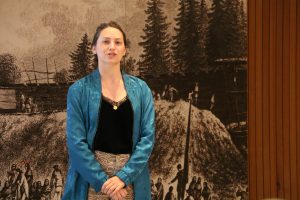
A meaningful part of my time at the conference was participating in a panel with the Deep Ocean Stewardship Initiative (DOSI), where I spoke about my experience on the 2025 NorthEast Pacific Deep-sea Exploration Project (NEP DEP) and the importance of outreach connected to that work.
I shared that the expedition was not only about research, but about creating pathways for connection between deep-sea science and indigenous communities. Through outreach efforts such as live-streams, storytelling, and knowledge sharing, we were able to bring that experience to Nuu-chah-nulth communities and make it accessible to youth and community members who may not otherwise have opportunities to engage with this type of science.
A major highlight of the conference was the strong focus on outreach and communication. Many presentations emphasized storytelling, community engagement, and creating opportunities for people to connect with ocean science in ways that feel personal and accessible. Outreach from initiatives like the NEP DEP expedition helps spark curiosity, build confidence by asking questions, and open doors to future opportunities in ocean science. This supports Nuu-chah-nulth’s principle of hishuk-ish tsawalk (everything is connected, everything is one).
Another exciting aspect of the conference was the focus on emerging technologies. From advanced ocean monitoring systems to new tools for mapping and data collection, there was strong energy around how innovation can support better decision-making and conservation efforts.
Being in a space with so many passionate individuals was incredibly motivating. Conversations extended beyond presentations, with people openly sharing ideas, challenges, and solutions. It was a reminder that while ocean issues can feel overwhelming, there is a global network of people actively working toward solutions.
From an Indigenous perspective, the experience also brought forward important reflections. While there is growing awareness around inclusion and collaboration, there is still work to be done to ensure Indigenous knowledge systems are meaningfully respected and engaged in appropriate, community-led ways.
At the same time, it made me reflect on the strength of the work happening at home. Across the Nuu-chah-nulth Nations, there is a deep and longstanding connection to ocean stewardship that continues to shape the work I am fortunate to be part of. Opportunities like this allow me to share what I am learning and bring back ideas that can support communities in ways that align with Nuu-chah-nulth’s priorities and values.
Overall, this experience left me feeling inspired, connected, and motivated. It reinforced that ocean science is not just about research, it is about people, relationships, and collective responsibility. Most importantly, it showed that across the world, there are many people working hard to protect the future of our oceans.