By Irine Polyzogopoulos, Communications and Development Coordinator
In late January, Nuu-chah-nulth Nation fisheries representatives met with Uu-a-thluk, Fisheries and Oceans Canada (DFO) and Landmark Fisheries Research staff to open a new chapter in West Coast Vancouver Island (WCVI) ƛusmit (herring) management.
The Uuʔaałuk ƛusmit (Taking Care of Herring) Project Workshop took place from January 21 to 22, at the Tigh-Na-Mara Resort in Parksville. Funded by the BC Salmon Restoration and Innovation Fund, the project explores an innovative approach to WCVI herring management that reflects Nuu-chah-nulth knowledge on herring predator influences, spatial dynamics and stock structure, and in-season fishery management.
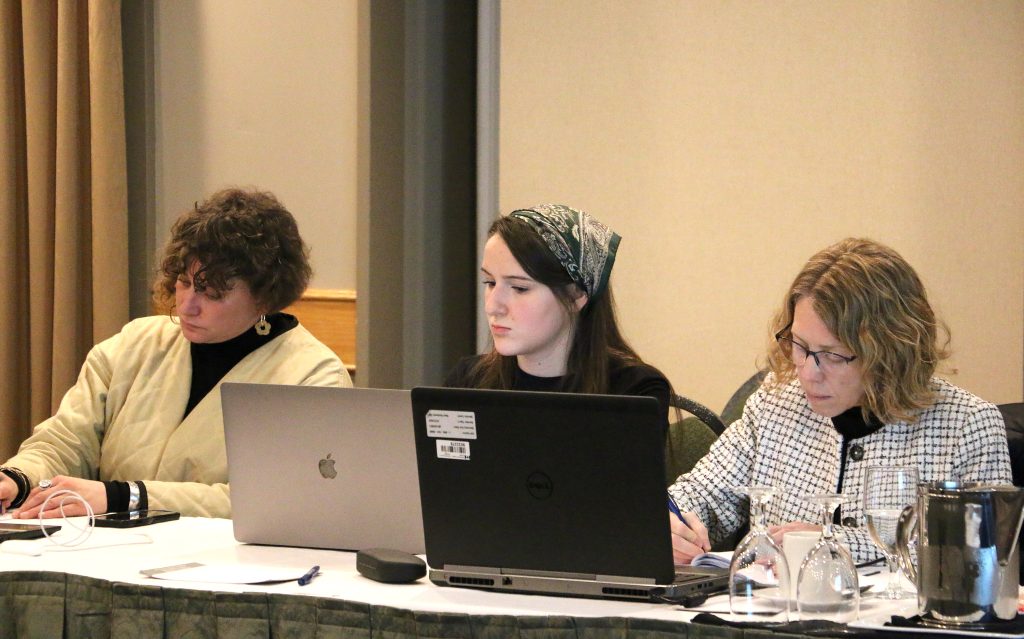
Over 30 participants met in-person and virtually to discuss the next stage of the project, which is to incorporate five years data analysis results (2019-2023) into ƛusmit science and management processes.
“There is no example of this in Canada that’s been worked into a management framework,” said Dr. Ashleen Benson, President of Landmark Fisheries Research, of the project’s novel approach.
“In terms of scientific innovation, this project has leapfrogged herring science on the west coast into a new world,” she added.
Historically, WCVI herring stocks have been managed through a one-stock aggregate approach, however, that is about to change.
Through robust discussion and review of Landmark’s analysis results, workshop participants agreed that a three-stock model approach would better suit WCVI herring populations.
“We can fit a three-stock area with an annual time stamp very quickly and that includes predation, so we can match what DFO is doing in terms of advice at this scale,” Benson said during the workshop.
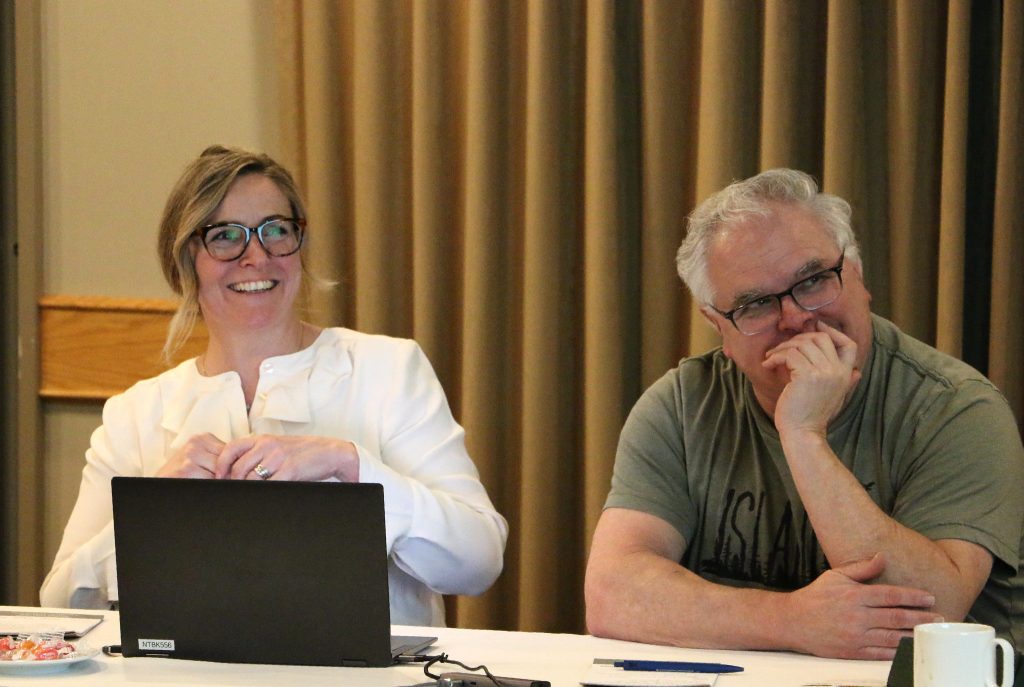
Ashleen Benson of Landmark Fisheries Research and Uu-a-thluk’s Jim Lane
The nations’ ultimate objective is to rebuild, and one day harvest, WCVI ƛusmit stocks.
“We have a funding proposal in to explore ‘What does a sustainable herring fishery look like for WCVI?” said Jim Lane, Acting Program Manager for Uu-a-thluk, regarding the project’s next stage.
Rebuilding objectives vary from nation to nation. For Aline Carrier, Toquaht First Nation’s Marine Stewardship Technician, “It is not just the stock that needs to rebuild, but our relationship to the stock as well.”
For Tla-o-qui-aht Fisheries Manager, Andrew Jackson, it is about securing the resource for future generations.
“I don’t think we’ll be harvesting in my lifetime, but somewhere down the line, someone will be able to say, ‘there’s enough to harvest’,” said Jackson.
Jackson initiated dialogue around the importance of mitigating herring spawning ground disturbance as part of the management model.
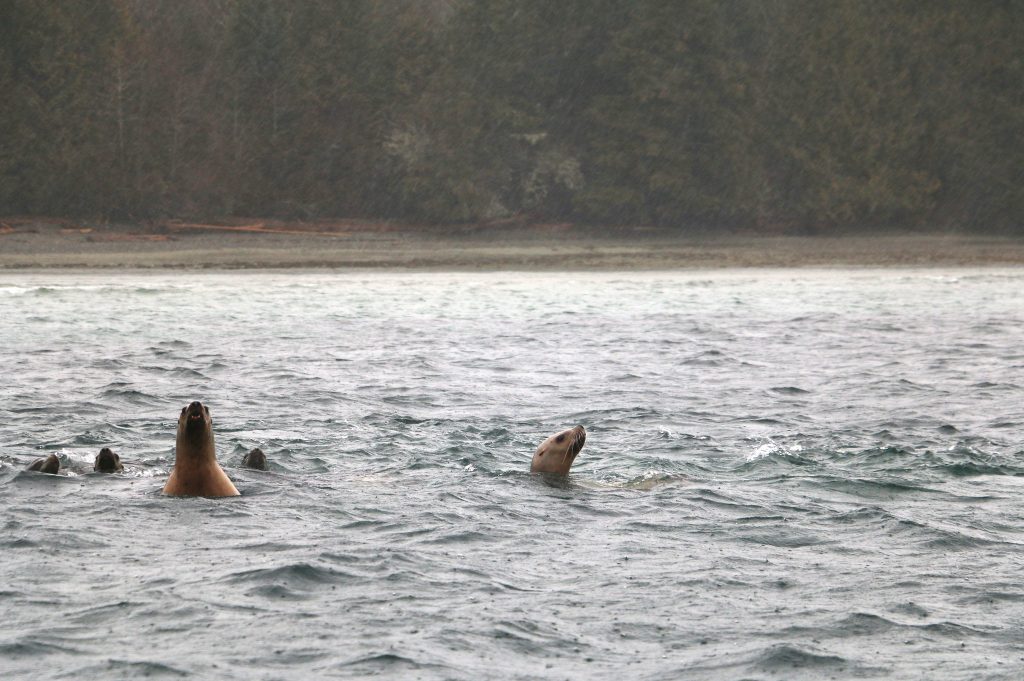
“When Covid came, there was less noise pollution in the water and that played a role in them [herring] coming back,” he said. Jackson questioned why bait fishing at ƛusmit spawning grounds is allowed and pointed out that a similar action would not be tolerated in salmon habitat.
Nation representatives including Carrier, Huu-ay-aht Natural Resource Manager, Amelia Vos and Hesquiaht Fisheries Technician, Rufus Charleson, shared their nations’ concerns regarding vessel traffic near ƛusmit spawning habitat and explored the idea of distance restrictions for active spawn areas.
“We need to educate tour boats and fishers, they don’t always understand herring cycles,” said Charleson.
The creation of spawning habitat was another area explored during the two-day meeting.
“My thinking is to put trees down … as one of the ways to create spawning habitat,” said Jackson, whose idea was supported by Uu-a-thluk and DFO as a future research project.
Over the past five years, the Uuʔaałuk ƛusmit (Taking Care of Herring) Project has become a positive symbol of reconciliation in action.
“When Jaclyn became involved in this, she showed us that there is a way to change the relationship between DFO and the nations,” said Benson, about project collaborator Jaclyn Cleary. Cleary is the Program Head – Pacific Herring Quantitative Assessment Methods Section, Stock Assessment and Research Division, Science at DFO.