By Alison Wale, Capacity Building Coordinator
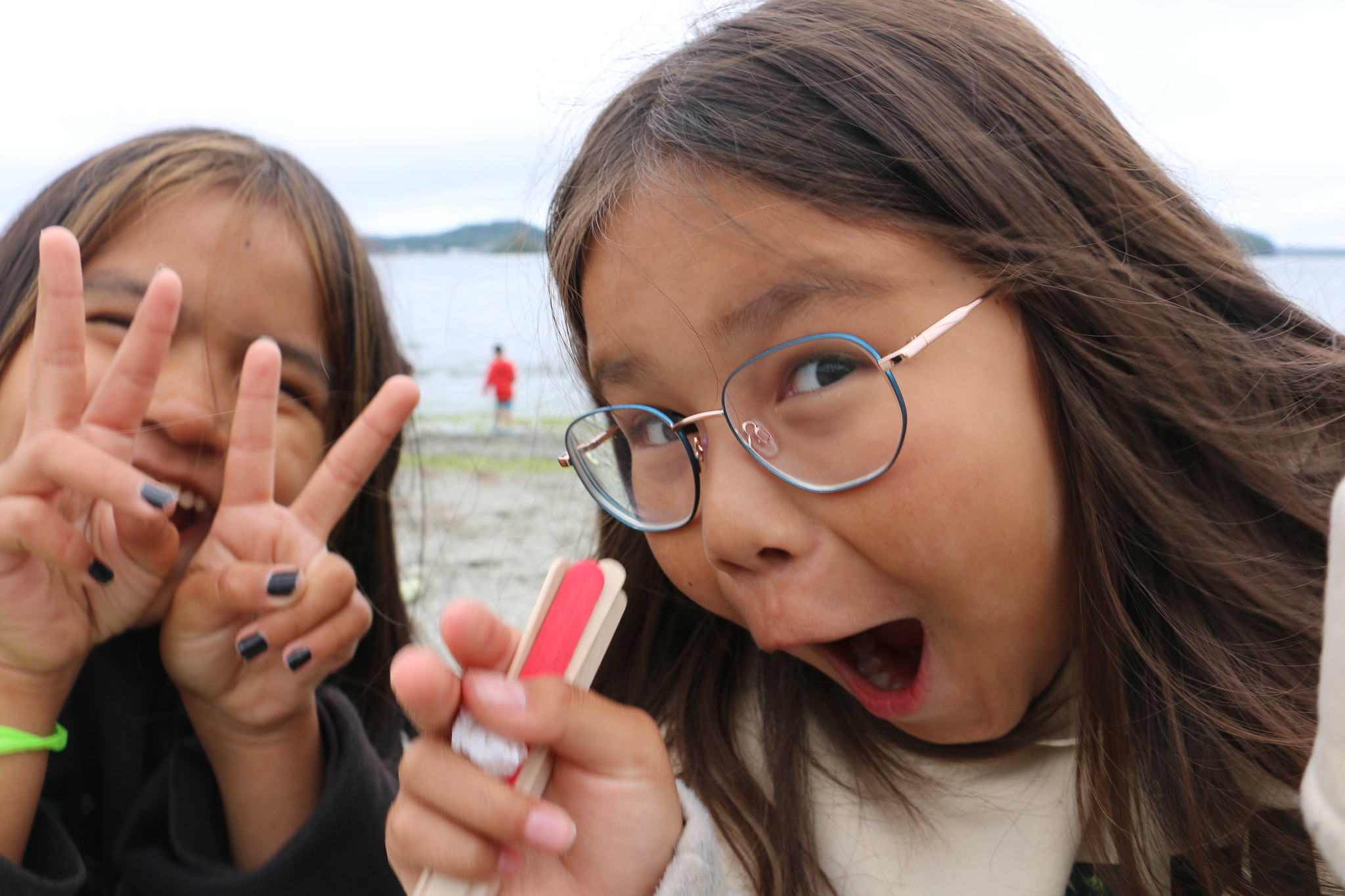
Wide eyed wonder and a lot of “wow” moments filled Nuu-chah-nulth youth’s time at summer science camp this year.
Uu-a-thluk is honored to be in our 18th year of providing summer science camps to Nuu-chah-nulth Nations. Over 125 youth from Yuułuʔiłʔatḥ, Tla-o-qui-aht, Uchucklesaht, Mowachaht/Muchalaht, Hupacasath and Tseshaht First Nations attended InSTEM summer science camps hosted in their communities.
Hupacasath First Nation (HFN) opened their camp to all Nuu-chah-nulth youth, resulting in campers from Nuchatlaht First Nation travelling and spending the week in Port Alberni to attend the camp. Science camp programming, delivered by University of Victoria (UVic) marine biology students, included fun games, activities and experiments centred around STEM (science, technology, engineering and math) subjects. Campers also participated in crime scene investigation and ocean-themed days.
Youth gasped with astonishment at the “can crush” demonstration as instructors showed what happens to a tin can when it is subjected to the pressure of the deep sea. “Elephant’s toothpaste” was also a hit with the kids.
Campers had the opportunity to make a foamy mess which showed them the surprising chemical reaction caused by the rapid decomposition of hydrogen. In addition, children were able to take home ornaments covered in crystals that they grew in a lab experiment.
After learning cool facts about the deep ocean, Hupacasath First Nation (HFN) and Tseshaht First Nation camp kids connected via live stream to scientists aboard “The Tully.” The Canadian Coast Guard vessel, known formally as the CCGS John P. Tully, is an offshore oceanographic science vessel used for Northeast Pacific Deep-Sea Exploration Project (NEPDEP) expeditions.
Campers were thrilled to be able to ask scientists questions in real time. Eight-year-old Cooper Porter from HFN asked, “What’s the oldest animal you’ve found down there?” When scientists answered that it was a 9000-year-old sponge, Porter’s candid reaction of amazement and blurting out of “What the skibidi toilet?!” elicited laughter in everyone, including scientists at sea who were happy to connect with the youth and community.
Through candid dialogue, campers realized they too can participate in ocean-related careers one day. Scientists drew a correlation between video games and the expedition by saying, “If you like to play video games, you could be a ROPOS pilot,” which garnered a positive response from the crowd (ROPOS is a remotely operated vehicle that assists in deep-sea research).
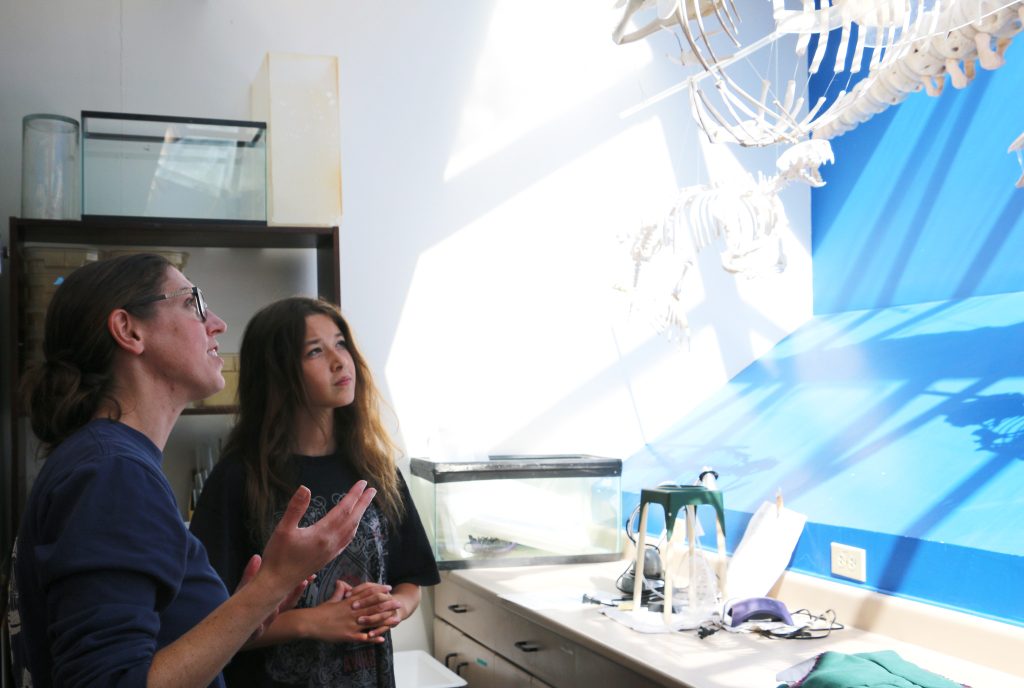
Hupacasath campers also enjoyed a field trip to Bamfield Marine Science Center (BMSC) and Pachena Bay Beach for swimming fun and games. The kids were able to see a whale skeleton and put their hands in the “touch tanks” while learning from BMSC educators.
JM Ledet, Head of Education Services at BMSC, taught the kids about the dangers of plastic in the ocean and when the kids were later playing in the water and found plastic, they were excited to remove it.
“I love seeing the kids in camp get that spark of interest in science and end up going to university for science-related programs,” said Carolina Tatoosh, HFN Youth and Community Coordinator. Tatoosh, who has been working with youth for over 25 years, has seen the long-term effects of programs like Uu-a-thluk’s science camps and the impact they can have on kids.
Tseshaht First Nation took their youth to tour, learn and play in their ha-houlthee (chiefly territory). The nation’s fisheries department filled their boats with campers for a day of exploring Keith and Nettle Islands, as well as surrounding areas.
Bethany Watts, whose child participated in the BMSC field trip, said, “I wish I was able to go to camps like this when I was young, but I’m happy my kids are able to participate now.”
Uu-a-thluk science camps expose kids to Western and traditional styles of learning while inspiring potential STEM-related careers. Uu-a-thluk aims to guide more Nuu-chah-nulth youth into environmental sciences with the hope they will one day support their nation’s efforts to manage and harvest ocean resources.
Klecko klecko to Nuu-chah-nulth Nations for their participation in the 2024 summer science camps. Uu-a-thluk also extends our deepest gratitude to UVic’s Science Venture program and our donors for your support in making this year’s camps unforgettable.
Any Nuu-chah-nulth Nations interested in hosting a camp during the school year or next summer can contact Alison Wale, at alison.wale@nuuchahnulth.org or 250-735-5684.
To sponsor a child for next year’s camps, please visit our donation page.