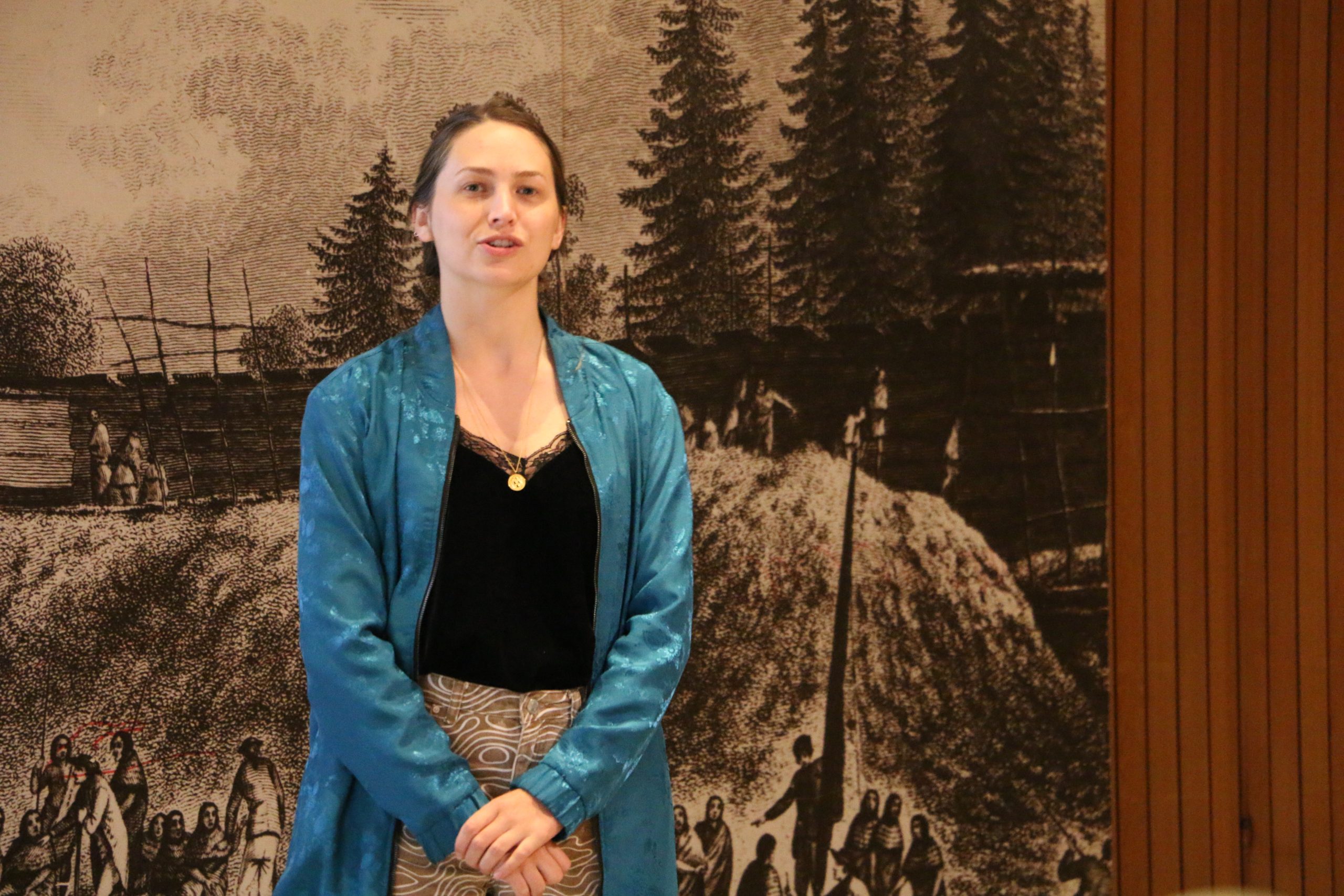
Vanessa Moll at the MMFN Community Dinner and fisheries meeting.
Vanessa Moll has joined the Nuu-chah-nulth Tribal Council’s Uu-a-thluk Fisheries Team as the Northern Region Biologist in a term position, filling in for Dani Naumann during her maternity leave. Some may already know Vanessa from her previous role as Marine Biology Project Manager with the Mowachaht-Muchalaht First Nation (MMFN).
Vanessa brings a strong academic foundation in marine and freshwater sciences. She holds a Bachelor of Science in Earth and Ocean Sciences from the University of British Columbia and a Master of Science in Marine and Lacustrine Science and Management from Vrije Universiteit Brussel in Belgium, where she graduated with distinction. Her studies included oceanography, biology, environmental assessment, ecotoxicology, and climate change.
Her interest in environmental science began with a desire to help conserve ecosystems while supporting communities most affected by environmental change. That focus shaped both her education and career, leading her to study the links between science, culture, governance, political movements, religion, and colonization. These experiences deepened her understanding of the social and cultural dimensions of environmental work and the importance of collaborating respectfully with communities to support local values and priorities.
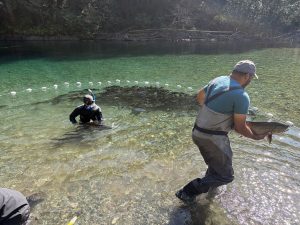
While at MMFN, Vanessa worked closely with Dani and Claudia Tersigni on several initiatives she will continue supporting in her new role at NTC, including fish escapement monitoring and herring collection programs. Her work involved collaboration with community members, Fisheries and Oceans Canada, government agencies, and other project partners. She especially valued the community-centered nature of the projects and the opportunity to combine scientific information with local knowledge, priorities, and interests. These experiences reinforced her belief that environmental projects are strongest when they are practical, relevant, and responsive to community needs.
Vanessa’s environmental career began in an unexpected place: beekeeping. She worked with a company that used beehives as educational tools to reconnect people with nature through workshops and outreach programs. The compact, interconnected nature of a beehive offered a tangible way for people to observe how surrounding ecosystems influence pollinator health throughout the seasons.
Her career later shifted toward marine conservation and research, taking her to opportunities around the world. In Greece, she participated in boat-based dolphin surveys, collecting photographs of dorsal fins for photo-identification research. This technique uses unique fin markings to track individual dolphins over time and provides valuable insight into population trends and dynamics. During that time, she also volunteered to support the education of refugee children.
Vanessa later travelled to South Africa, where she further developed her photo-identification skills through scuba-based shark monitoring surveys. These international experiences strengthened her appreciation for marine ecosystems and introduced her to a variety of scientific monitoring techniques and knowledge systems. Working alongside researchers on diverse conservation projects also gave her a greater understanding of the strengths and limitations of different approaches to environmental monitoring.
She also spent time in Kelowna with the Okanagan Collaborative Conservation Program, helping coordinate initiatives focused on protecting sensitive grassland ecosystems and mitigating the impacts of urban expansion. The role involved collaboration among organizations, stakeholders, and communities with differing perspectives, all working toward shared conservation goals. Across her various positions, Vanessa has especially enjoyed working at the intersection of science, communities, and conservation, and finding ways to make scientific information accessible and meaningful to diverse audiences.
“I’m excited to continue building relationships with Nuu-chah-nulth communities and partners, and to support fisheries work that brings together science, local knowledge, and community priorities,” Vanessa says.
Vanessa is excited to continue supporting fisheries and marine initiatives across Nuu-chah-nulth territory through Uu-a-thluk. She looks forward to reconnecting with colleagues and community members she has worked with previously while building new relationships with other communities and partners. Most of all, she is eager to learn from the people she works with and contribute her experience and perspective to Uu-a-thluk’s important work. Welcome to Uu-a-thluk Vanessa
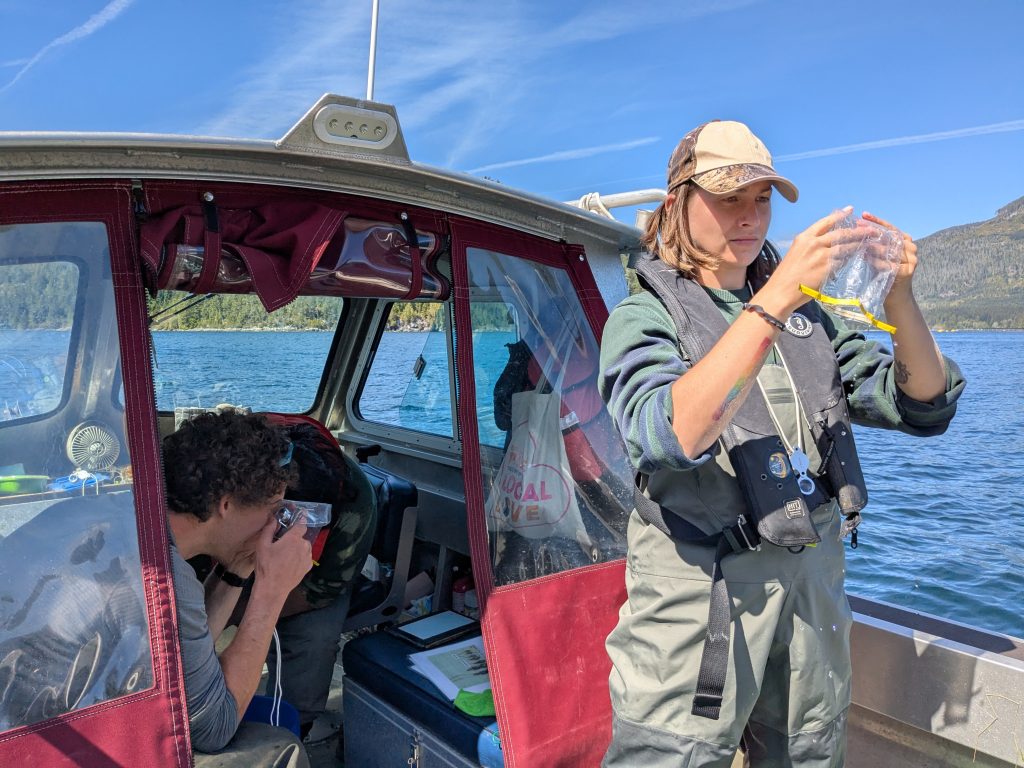
Vanessa Moll sea lice sampling with MMFN.