By Carilia Horning, Term Central Region Biologist
When the tide is out, the table is set. This adage is often used to describe the importance of intertidal species like y’a?isi (butter clam) to nations up and down the coast.
Clams have been harvested by Nuu-chah-nulth peoples on the WCVI since time immemorial and have supported a commercial fishery for over one hundred years.
Rufus Charleson, Hesquiaht Fisheries manager, has been conducting clam surveys in Hesquiaht ha-houlthee (chiefly territory) for over thirty years. According to Charleson, “Hesquiaht’s management of resources is essential to ensure that [Nuu-chah-nulth] Peoples can continue to live off the ocean garden”.
When Charleson first started doing surveys, First Nations’ role in clam management was limited to gathering information for the Department of Fisheries and Oceans Canada (DFO). Now, First Nations play an active role in management.
Charleson has witnessed changing threats to clam beds in Hesquiaht such as predation from introduced sea otters to sand sediments from landslides burying the clam beds and smothering them.
Andrew Jackson, Tla-o-qui-aht Fisheries Manager, and Charleson have seen a decline in clam populations in the last 10 years and stress the importance of continued stewardship in their haa-haa-houlthee.
As a result, this summer, Tla-o-qui-aht, Hesquiaht and Ahousaht Fisheries Departments set out to inventory clam populations, engage youth and learn new clam management techniques.
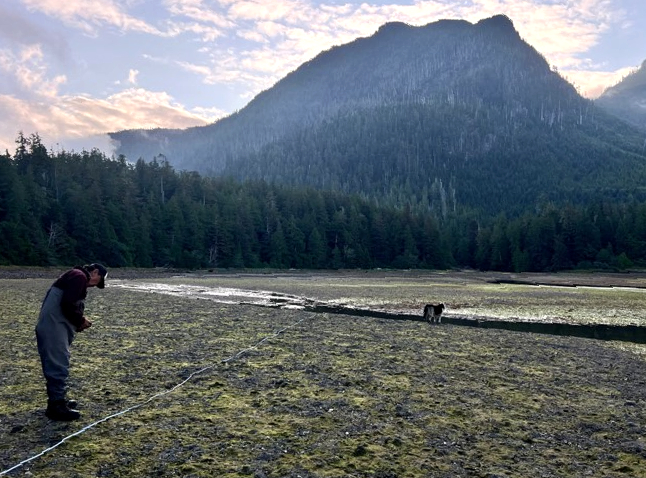
On a crisp July morning, the sun is just starting to peak out over the mountains behind Hesquiaht Harbour as Hesquiaht and Uu-a-thluk staff finish laying survey markers for a clam survey.
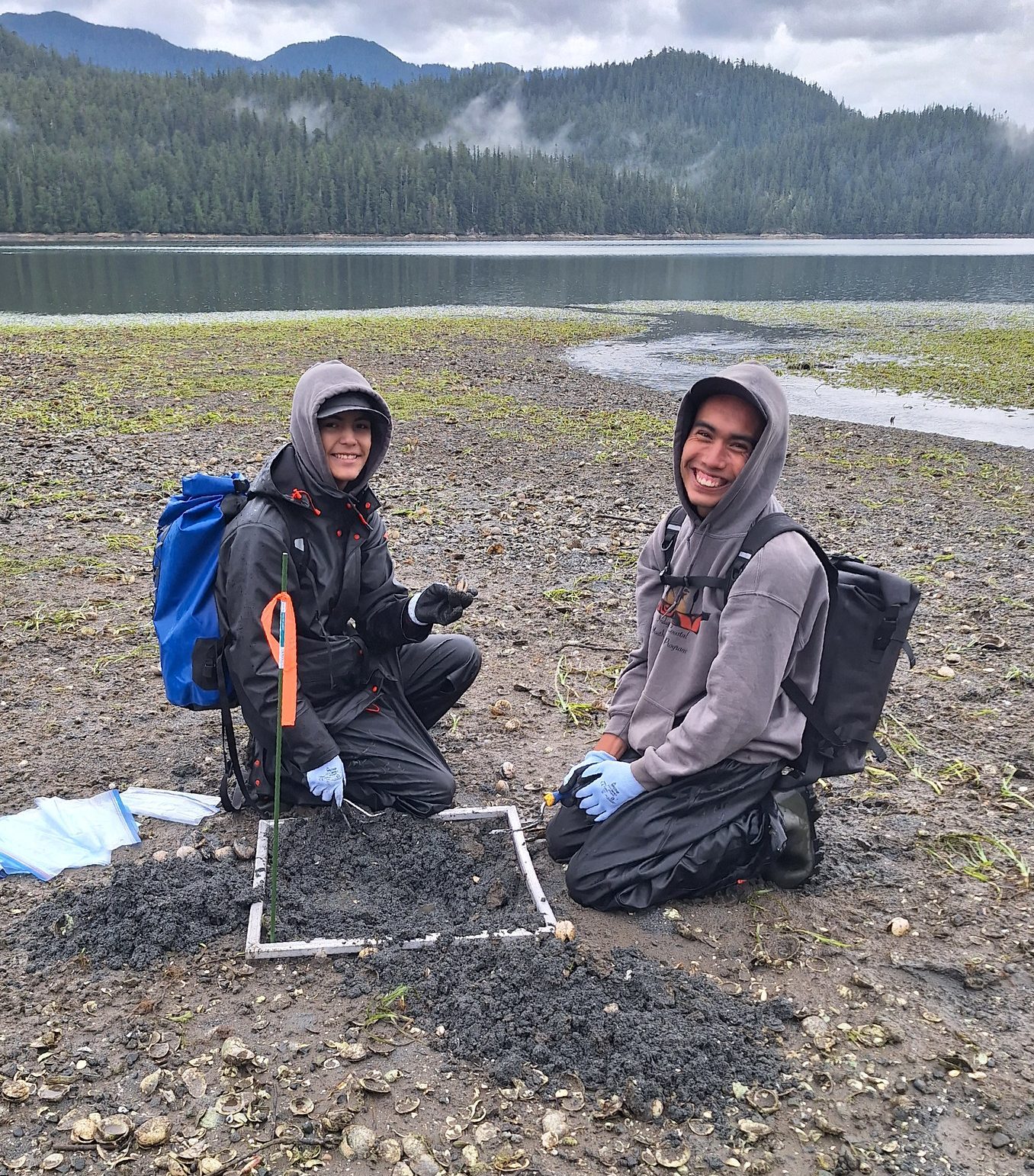
The air is thick with the smell of low tide; the only sounds are the squelch of boots in mud and a lone kingfisher’s cry. The team lays out a grid across the clam bed and randomly selects fifteen spots to dig an area of 0.25m2 (quadrat) within this grid to survey ḥičin (littleneck) and manilla clams.
Each clam is placed in a bag labelled with the quadrat it was from and brought back to the Hesquiaht’s Fisheries cabin to be sampled. The clams are measured and weighed, the species identified, and aged by counting the growth rings on the outside of the shell. Sampled clams are returned to the beach.
The data collected will be used by fisheries managers to estimate how many clams are on the beach, what species of clams are present and what the age structure of the clam population is.
“Clam surveys give us an idea of how well the clams are growing and help us manage our clam beds,” said Jackson.
The Ahousaht Fisheries team participated in a clam garden build at Malksope Beach that was led by Kyuquot and Checleseht First Nations and supported by the Coastal Voices project. The team’s involvement in the event was supported by a Clayoquot Biosphere Trust research and environment grant.
The event fostered collaboration between Nuu-chah-nulth Nations in building a clam garden and exploring shared issues faced by nations along West Coast Vancouver Island.
According to Kurt John, Fisheries Technician with Ahousaht Fisheries, “Working side by side with First Nations from as far as Bella Bella, youth and elders to all come together in creating a clam garden was a powerful experience.”
Hearing the elders emphasize the importance of protecting their land and only taking what was needed reminded John of the teachings that his mom shared with him. He is excited to bring home the knowledge he learned at the event.
Chance Fred, from the Youth Warriors program, echoed the importance of collaboration and noted that his favorite part of the event was, “Looking out over the beach and seeing so many people come together to create the clam garden.”