By Irine Polyzogopoulos, Communications and Development Coordinator
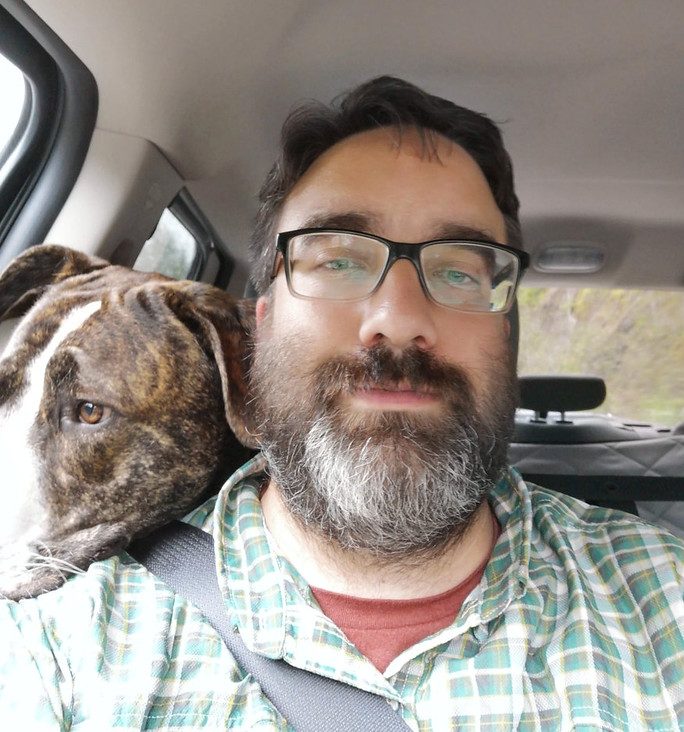
Wakiitama, David Johnsen, remembers when there were 10 people living in the village of Macoah and “lights out” was 10 p.m. daily, when the community generator was switched off.
The Lands and Resources Director for t̓uk̓ʷaaʔatḥ (Toquaht) Nation describes his childhood as interesting, having spent a large portion of it outdoors and on the water.
“Chief Bert Mack was my grandfather, and he was a fisherman who had a boat, so I was always out on weekends in a boat with him,” said Johnsen.
As a teenager, Johnsen began fishing for trout in a small Zodiac boat, eventually venturing out to the open ocean.
He attended North Island College after high school, and in his third year, a chance to work on a traditional use study sparked a career of over 20 years serving his nation in various roles.
“I already had an interest in computers, and the study was geographic information systems (GIS) mapping, interviewing citizens and elders and gathering all that traditional information. I thought that was really cool so that’s what I ended up doing,” he said.
In his current role as Director of Lands and Resources, Wakiitama oversees forestry referrals, land transfers, distribution of food fish to Toquaht’s citizens and the nation’s environmental stewardship.
Marine stewardship is a large component of the nation’s environmental activity.
According to the nation’s website, the Marine Stewardship Monitoring Program is guided by the Nuu-chah-nulth principle of hišuk ma c̓awaak – everything is one. It “takes a holistic approach to observe and collect data on the entire coastal ecosystem, rather than focusing on one particular species at a time.”
Toquaht’s approach combines traditional knowledge with Western science to gain a comprehensive understanding through projects that include salmon habitat restoration and fish and coastal habitat monitoring.
The Program is in a data collection phase, relying on two technicians to conduct field work. One of those technicians is Aline Carrier, Uu-a-thluk’s former Capacity Building Coordinator, who joined the nation in 2022.
“Ali’s got a bunch of project such as eelgrass monitoring, kelp monitoring and kelp seeding. Herring, which is important the the nation, green crab, which is an invasive species, monitoring the health of Dungeness crab because there’s so much commercial crab fishing going on in our territory, salmon of all species, stream restoration for salmon and clam and oyster gardens and beaches,” said Johnsen.
“We’re very busy for a small team,” he added.
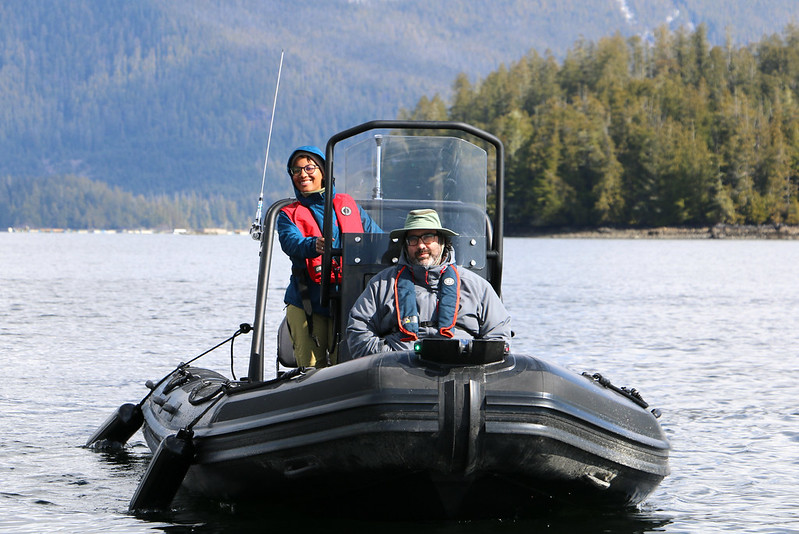
Aline Carrier and David Johnsen conduct a herring survey in March 2023.
The Kelp Restoration Pilot Project Johnsen refers to is elaborated on by Carrier.
“The goal of this project is to test kelp restoration at different sites in Toquaht territory to understand what the feasibility of a broader kelp restoration project would be,” said Carrier.
“Once we have identified the most vulnerable sites on Toquaht territory, we will be able to have a better understanding of the process, budget and capacity needed to do a larger kelp restoration project.”
Strategic partnerships with federal, provincial and environmental NGO agencies strengthen the nation’s capacity to monitor marine resources in their ha-houlthee, and these include Fisheries and Oceans Canada (DFO), Redd Fish Restoration and Ucluelet Aquarium.
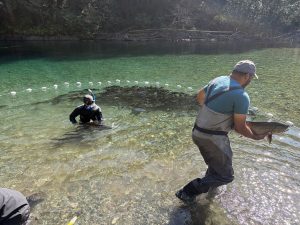
Toquaht is one of six Nuu-chah-nulth Nations who have an annual herring monitoring contract with DFO. Lands and Resources staff collect bio samples between late January and the end of March and submit them to the Department for assessment. The nation also retains a portion of the fish for distribution to its citizens.
Highly revered siiḥm̓uu, or herring roe (eggs), are also distributed for food and ceremonial purposes.
“The Lands department puts out cedar boughs [kʷaasuʔitap] for herring roe and we also give that out,” said Johnsen.
The process Johnsen is referring to is the Nuu-chah-nulth custom of sinking tree branches in an active herring spawn to allow for collection of the coveted eggs.
Toquaht’s website states that, “This traditional practice endures, albeit with increasing difficulty due to herring now spawning in deeper waters caused by warmer temperatures.”
In keeping with traditional practices, but also working to modernize them, Wakiitama has earned a certificate in Aboriginal Language Revitalization through Vancouver Island University.
“My mother is the language coordinator for the nation, so she had me helping with the technical aspects [of a language project] over the years,” he said.
In 2024, Toquaht acknowledged Johnsen’s dedication to his nation by bestowing him with a Toquaht Nation Government Achievement and Excellence Award. The award recognized his far-reaching contributions like meeting the technological needs of the community of Macoah in addition to his environmental planning and restoration.