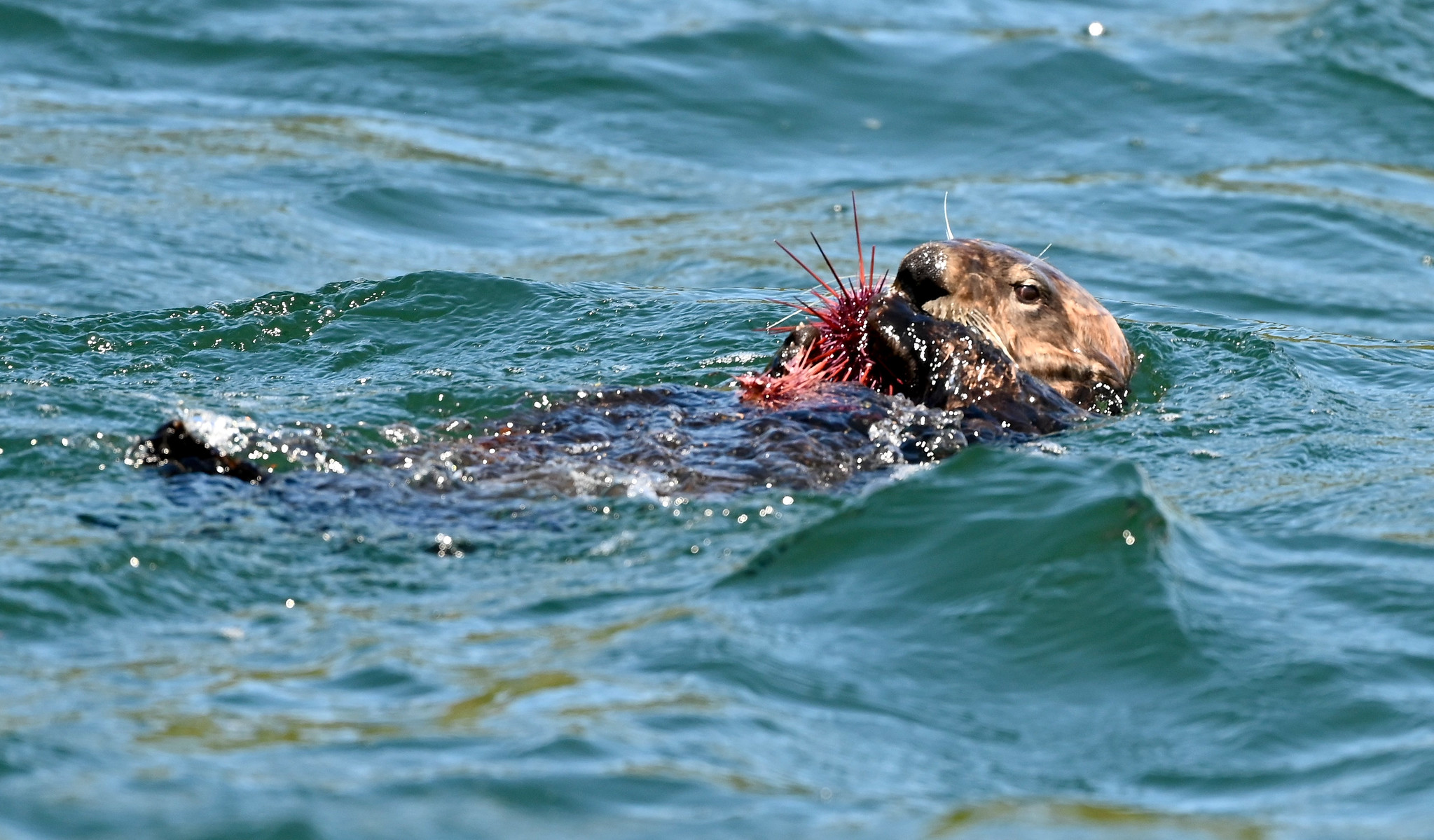
Photo: Cherisse Du Preez
By Irine Polyzogopoulos, Communications and Development Coordinator
At the February gathering of the Council of Ha’wiih Forum on Fisheries, Nuu-chah-nulth Ha’wiih (hereditary Chiefs) reiterated the need to develop management objectives for k̓ʷak̓ʷał in Nuu-chah-nulth haa-haa-huułii (Chiefly territories).
Ha’wiih directed Fisheries and Oceans Canada to work with Nuu-chah-nulth Nations on sea otter management through the Uu-a-thluk/DFO Joint Technical Working Group process, including participating in sea otter surveys and investigating innovative techniques for managing k̓ʷak̓ʷał populations.
“I think it’s critical to even get a ‘yes, we’re willing to manage sea otters,’ from the government,” said Wickaninnish, Cliff Atleo, Council Chair, at the meeting. “To this date, they are not managing sea otters … they are literally out of control.”
Josh Charleson, fisherman and Hesquiaht First Nation member, echoed a similar sentiment.
“I remember being able to get crabs, clams and all our other seafoods in Hesquiaht Harbour … and then sea otters took over and collapsed the crab stocks,” said Charleson. “All of our beaches were completely wiped because they ate every single harvestable clam in the harbour, and it’s never recovered.”
Fisheries and Oceans Canada has undertaken a fair amount of work on sea otters and other marine mammals, but it is not ready to be communicated out as the analyses are still works in process. It illustrates the need for Uu-a-thluk and Nuu-chah-nulth Nations to develop a channel of regular communications DFO staff working on marine mammals.
The last survey information communicated to the nations dates to 2017, when the population was estimated at 8,110. According to Charleson, this figure is low, as “thousands of them” can be seen in Clayoquot Sound alone when travelling by boat on a calm day.
“It’s past the point where doing nothing is an option,” said Charleson.