Photo: Melody Charlie
By Irine Polyzogopoulos, Communications and Development Coordinator
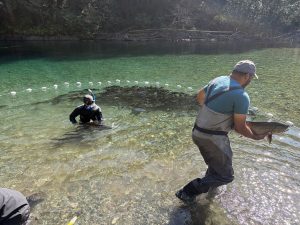
For decades, Nuu-chah-nulth Nations have been sounding the alarm on the need to protect and rebuild fish populations and habitats in their Haa-haa-houlthee (Chiefly territories).
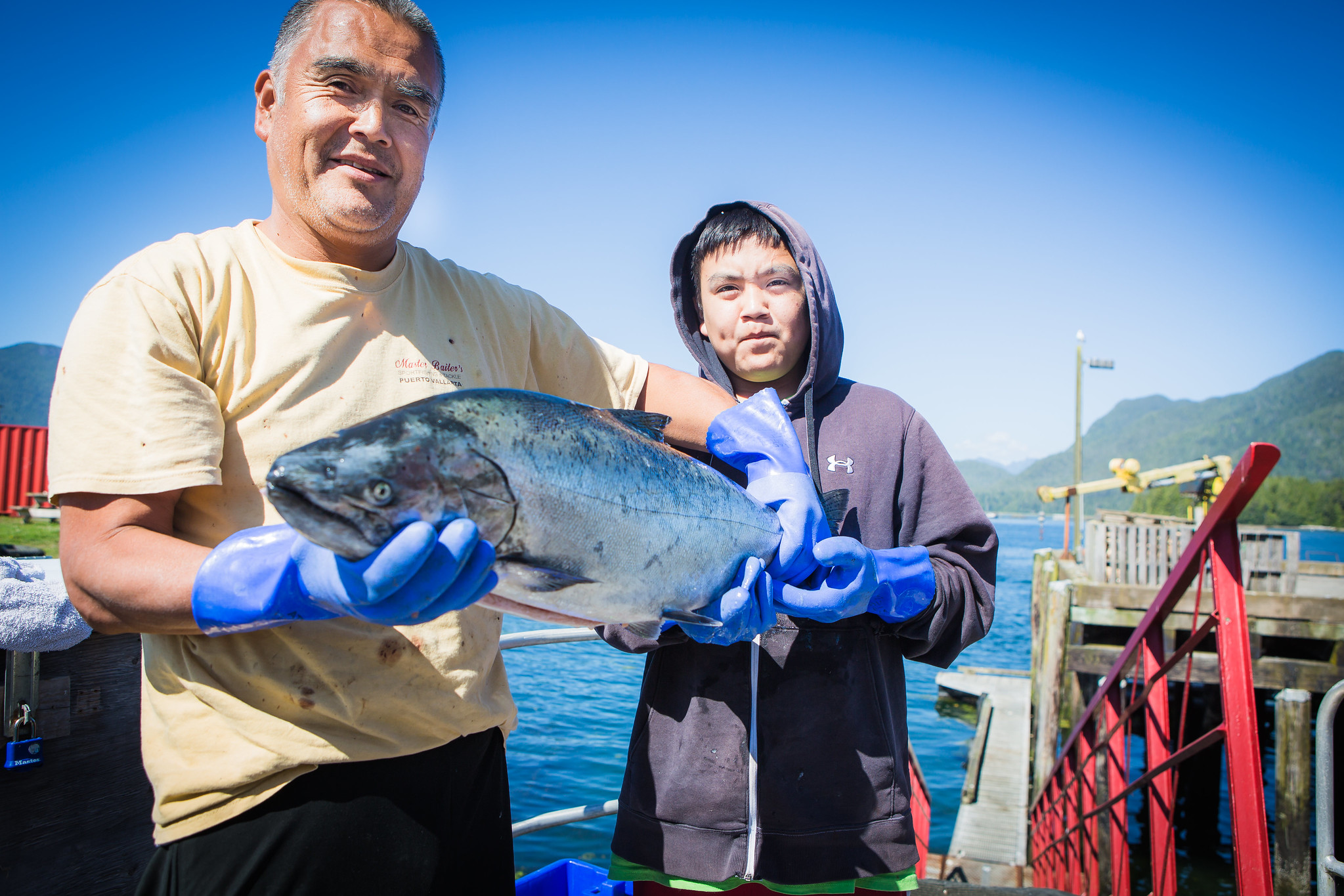
Chinook salmon (‘suuḥa’ in the ocean, and ‘sac̓ up’ when it reaches freshwater), are one of the species in need.
In early March, after years of collaborative development between West Coast Vancouver Island (WCVI) First Nations and DFO Pacific Region, the Honourable Diane Lebouthillier, then Minister of Fisheries, Oceans and the Canadian Coast Guard, approved the WCVI Chinook Salmon Rebuilding Plan.
“The rebuilding plan is not specific to a watershed or a stream, it provides guidance on the WCVI area overall as to rebuilding objectives for naturally produced WCVI Chinook,” said Jim Lane, Acting Program Manager for Uu-a-thluk.
From 2020-2022, Nuu-chah-nulth and Pacheedaht First Nations took part in several activities related to the rebuilding plan, including risk assessment workshops that were co-facilitated by West Coast Aquatic (WCA) and DFO, with technical support from Redd Fish Restoration Society.
The workshops were designed in a holistic manner that made space for different ways of knowing, identifying biological bottlenecks and creating strategies for recovery and rebuilding.
Among the risks to Chinook salmon that emerged were the loss of spawning habitat, less genetic diversity, harvest pressures and decreased juvenile survival in the marine environment.
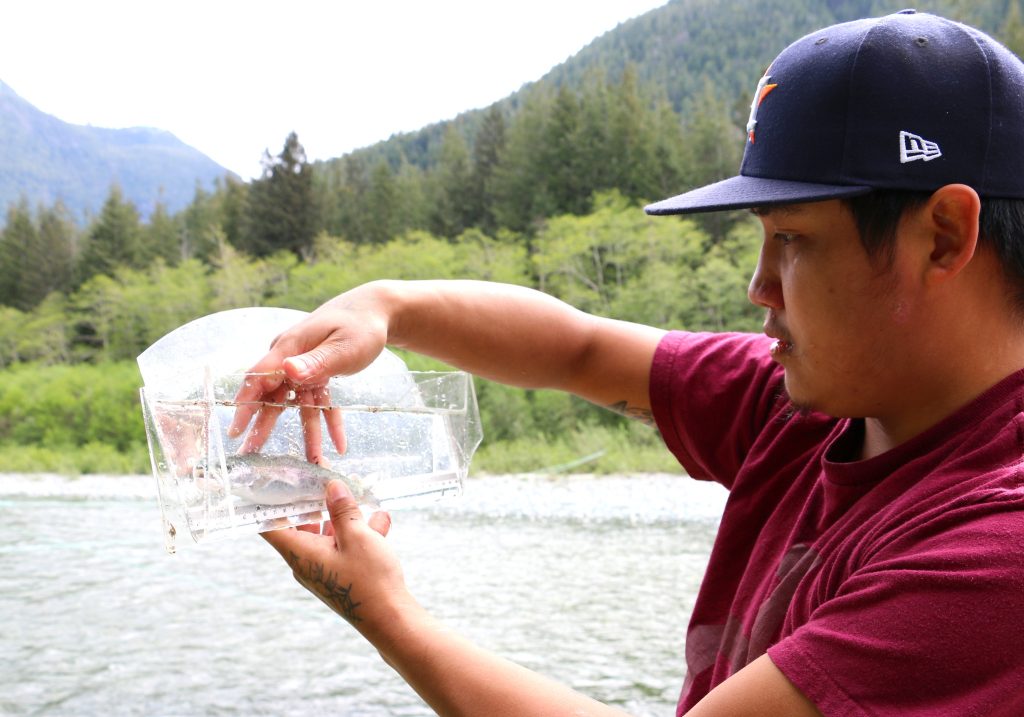
Wes Smith of Ahousaht First Nation measures the length of a juvenile Chinook salmon for the Bedwell Chinook Smolt Out-migration Project in 2019.
Claire Menendez is the Salmon Rebuilding Coordinator for DFO who has been collaborating with Marc LaBrie, Director of Development and Facilitator for WCA, on the coordination of Chinook rebuilding efforts for WCVI.
“Through this WCVI plan, we [DFO] realized that the FSP [Fish Stocks Provision] rebuilding plan template and guidelines really allowed for the development of a plan that was specific to WCVI and the needs of people doing work on the ground,” said Menendez.
“It provided the structure and timeline that was needed to bring people to the table and to get them working on something that had been difficult for a long time, while also having the flexibility that was needed to describe the key issues, challenges and needs of folks across the Island,” she added.
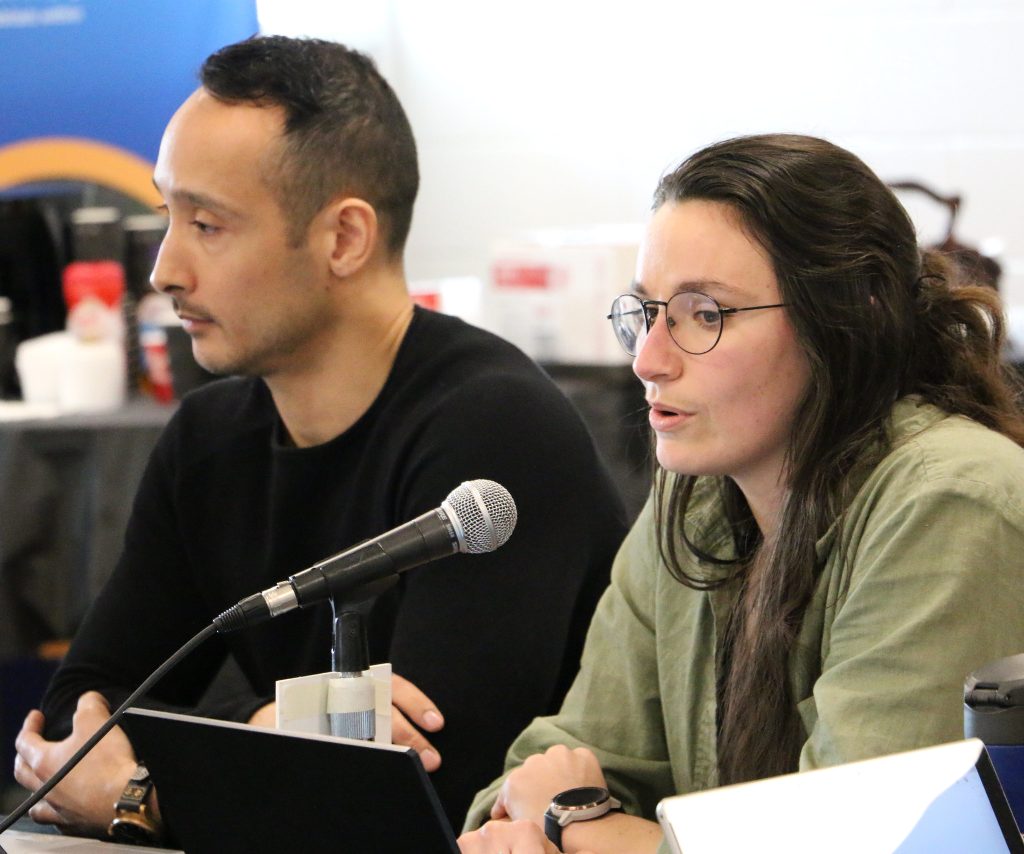
Claire Menendez (R) and Lee Harber of Fisheries and Oceans Canada at the February 2024 Council of Ha’wiih Forum on Fisheries meeting. Menendez has been focusing on salmon rebuilding for the last two-and-a-half years.
Contained in the WCVI Chinook Salmon Rebuilding Plan are 24 suggested management measures that guide rebuilding. The measures fall under broader objectives such as abundance, genetic and demographic targets.
Seventeen natural-original Chinook rivers including the Cayeghle, Zeballos, Moyeha and Sarita have been identified as suitable indicators to measure the integrated rebuilding targets, although rebuilding efforts will not be limited to these rivers.
The WCVI FSP Rebuilding Plan Steering Committee will work to support Nuu-chah-nulth Nations in the implementation of the rebuilding plan. The committee is comprised of representatives from Uu-a-thluk, Ha’oom Fisheries Society (HFS), Pacheedaht First Nation, Maa-nulth Treaty Nations and DFO (Regional Fisheries Management, Species at Risk, Area Resource Management, South Coast Stock Assessment, Salmon Enhancement, Habitat Restoration, Science).
Committee responsibilities include tracking local planning efforts and ensuring alignment with the broader WCVI-wide rebuilding vision described in the plan. It will also analyze the impacts of localized actions on broader populations, particularly in harvest and hatchery management.
The Plan will be reviewed in one year, at which time Jared Dick’s research on the Nuu-chah-nulth perspective on WCVI Chinook rebuilding objectives will be integrated. Dick, whose Nuu-chah-nulth name is whehs-wiss-sunup, is completing a master’s degree under the guidance of Candace Picco, HFS biologist, and Kerry Holt, Research Scientist at DFO, in collaboration with the University of Victoria.
According to Dick, he has completed two thirds of his interviews with Nuu-chah-nulth elders and knowledge-holders, which will define what a rebuilt Chinook population looks like for Nuu-chah-nulth-aht. He has started analyzing the data and aims to complete his thesis by December 2025.
“There is no precedent for Indigenous Knowledge and braiding in terms of Pacific salmon management,” said Dick, in reference to the undetermined mechanism under which his research will be integrated into the rebuilding plan.
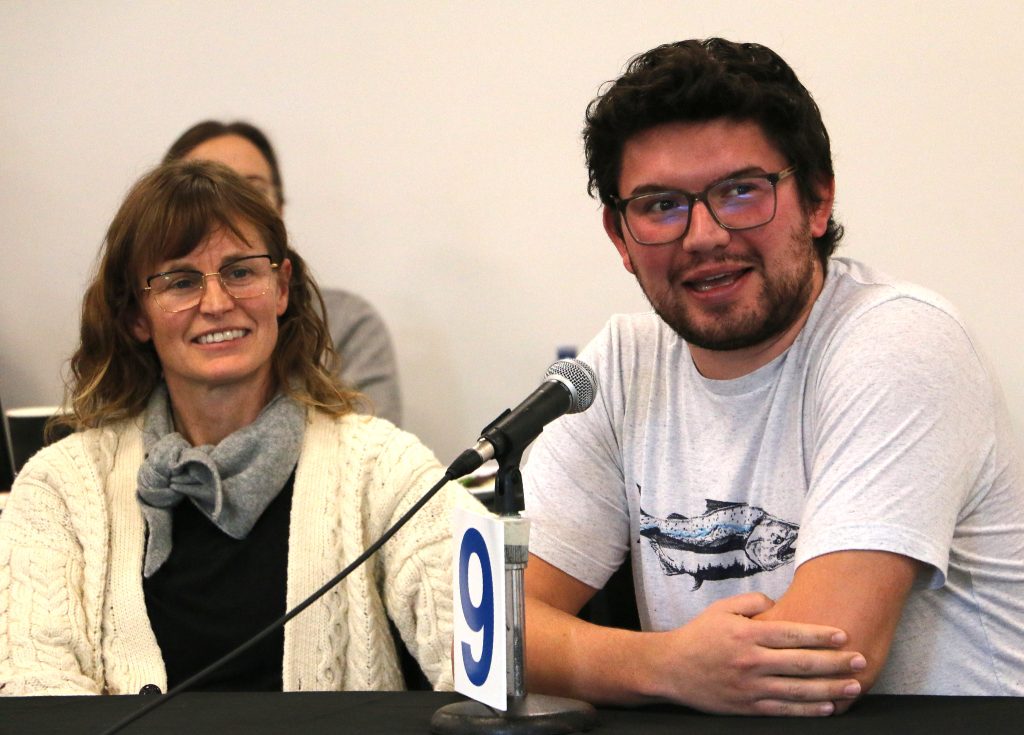
Jared Dick (R) and Candace Picco share an update on their collaborative WCVI Chinook rebuilding work at the February 2024 Council of Ha’wiih Forum on Fisheries meeting.
Dick’s preliminary findings point to a theme of interconnectedness that is lacking in Pacific salmon management.
“A Chinook rebuilding plan needs to be an ecosystem rebuilding plan because the entire system is broken right now,” he said.
For Andrew Jackson, Tla-o-qui-aht First Nation’s Fisheries Manager, the system cannot be fixed fast enough.
Terminal salmon fisheries in Tla-o-qui-aht’s hahoulthee have been closed for decades, and the rebuilding plan offers hope for, “The pride that would come with being able to fish from our own systems again.”