By Sabrina Crowley, Southern Region Biologist
The Ditidaht First Nation trace their roots back 5000 years. Originally called ‘DAWAHT,’ they were renowned as warriors, whalers and fishermen.
The nation relied on salmon, halibut and cod to support community needs and to trade and barter with other tribes. The arrival of European vessels in the 1770s opened new trading markets for the nation and for over one hundred and fifty years, Ditidaht took advantage of trading with ships and eventually new settlers.
A 1911 petition letter from Ditidaht to the Canadian government noted, “The ‘Nitinahts’ would also sell fish to U.S. vessels,” and that, “This small industry furnished us with a chance to earn money while remaining at home on our reserves instead to have to wander to the Fraser River.”
The nation’s principal village at this time was Whyac, which overlooked the treacherous entrance into Nitinat Lake. At maximum flood and ebb tides, dangerous currents of up to three and a half metres per second have been recorded.
Nitinat Lake was considered the richest chum salmon area on the West Coast of Vancouver Island. This abundance brought in canneries with the Lummi Bay Packing Company situating itself near Whyac in 1917. The cannery, which ultimately had detrimental impacts on the chum returning to the Nitinat watershed, operated until 1939 and then closed due to overfished chum stocks.
In 1952, the Department closed Nitinat Lake to commercial fishing for the stocks to replenish. It was shortly reopened in 1972 and 1973 then closed until the 1980s.
Ditidaht elders recall gillnetters off the mouth of Hobiton River – about two thirds of the way up from the Narrows – as they paddled to their smoke houses to prepare salmon. They also remember reserves dotted along the Nitinaht River where people gathered to catch and preserve fish.
Along with commercial fishing reopening, industrial logging operations increased in the area, removing trees from the headwaters to the mouths of most streams in the watershed. The impacts from logging significantly damaged salmon habitat, further decreasing productivity already negatively impacted from over-fishing.
The Nitinat Hatchery started operations in the 1980s to support fisheries. When commercial fisheries opened again for hatchery production, the Nitinat Lake area was closed off from them and fishing occurred outside of the lake.
Unfortunately, fisheries targeting abundant Nitinat Hatchery production also caught less productive wild runs with Dooba and Caycuse systems no longer having chum returns and the Nitinaht River having predominantly hatchery fish with little, if any, wild chum salmon.
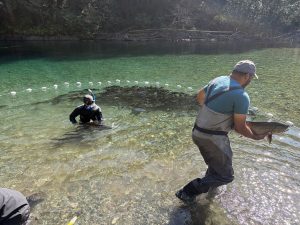
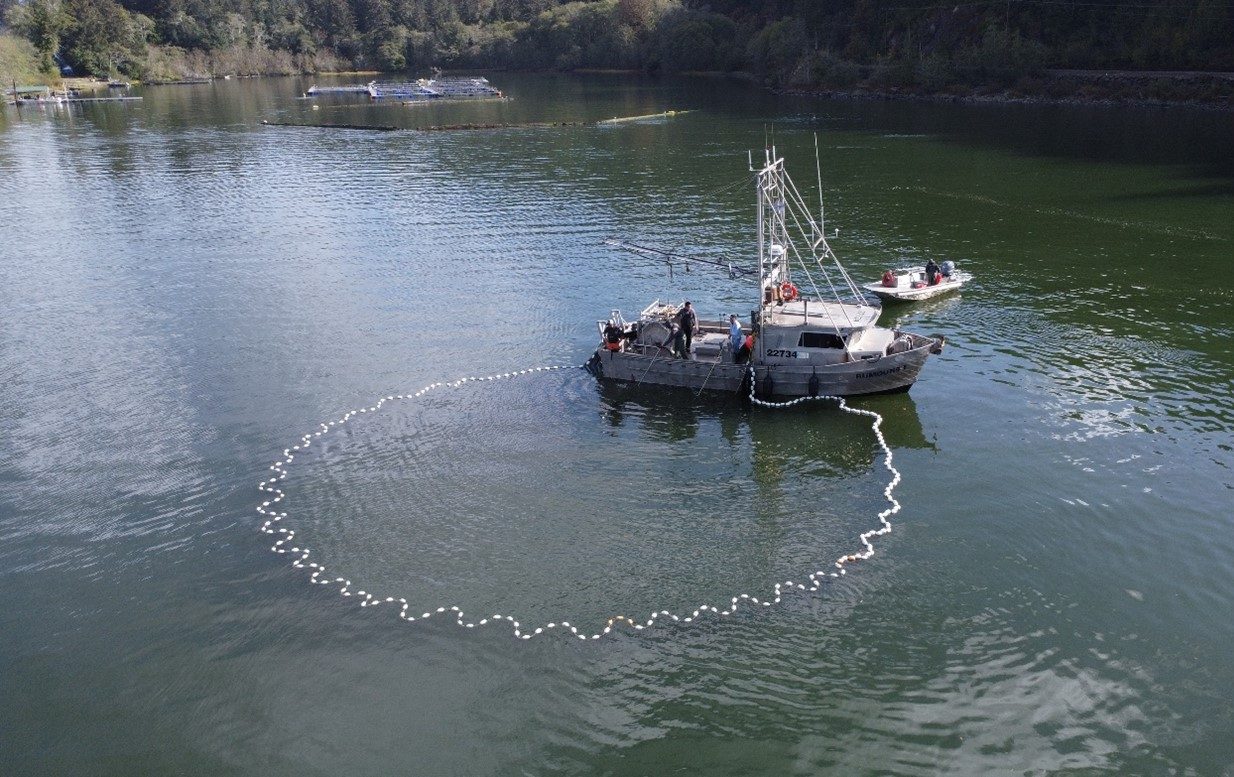
Ditidaht has a productive and collaborative relationship with the Nitinat Hatchery which has evolved over time. The nation’s Stewardship Program supports hatchery broodstock collections, provides in-season assessments of chum and Chinook returns and food fish for members.
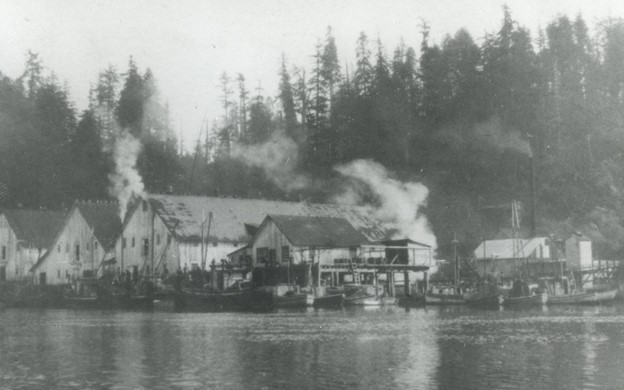
The Nitinat Cannery, circa 1929. Photo: UBC Special Collections.
The Program also supports habitat monitoring, assessing streams across the Nitinat and Cheewaht watersheds, groundfish and crab surveys, plus monitoring of the invasive European Green crab.
Funding for these activities is provided in part by community-based ESSR (Excess Salmon to
Spawning Requirement) fisheries for Nitinat Hatchery productions. Ditidaht’s economic fisheries support the assessment, monitoring and hatchery operations that produce the fish for commercial and recreational fisheries.
Paul M. Sieber, Director of Natural Resources for Ditidaht, emphasizes the importance of the nation’s involvement in the broodstock program.
“It is all tied together – can’t stop the broodstock program without it affecting other components,” said Sieber.
The hatchery production is more than an ESSR fishery, supporting Ditidaht’s future food needs, economic benefits for the small community and ties into program operations. Paul Tate, Fisheries Manager for Ditidaht, noted it has even supported other nations’ food needs outside of Nitinat.
Despite Ditidaht’s working relationship and connection to the hatchery, the Department of Fisheries and Oceans Canada (DFO) is looking to reduce chum production since outside commercial fisheries targeting Nitinat production have been closed. These reductions would impact the community and work backwards from Ditidaht’s goals of rebuilding.
Sieber would like to continue collaborating in a constructive manner with the Department, to work
around their policy issues.
“The end goal is to continue the economic fishery and call it something else other than ESSR,” said
Sieber. Sieber added that he would like to bring the Nitinat Hatchery to full production like it was built to be.
Both Tate and Sieber highlighted the nation’s desire to continue working on habitat and salmon stock rebuilding in their Ha-houlthee (Chiefly territory). They noted the hatchery plays a vital role in bringing this all together and would like DFO to stop making cuts to hatchery production.
Working collaboratively and honouring Ditidaht’s vision for their unique fishery would be an opportunity for the Department to show a true act of reconciliation.