By Irine Polyzogopoulos, Communications and Development Coordinator
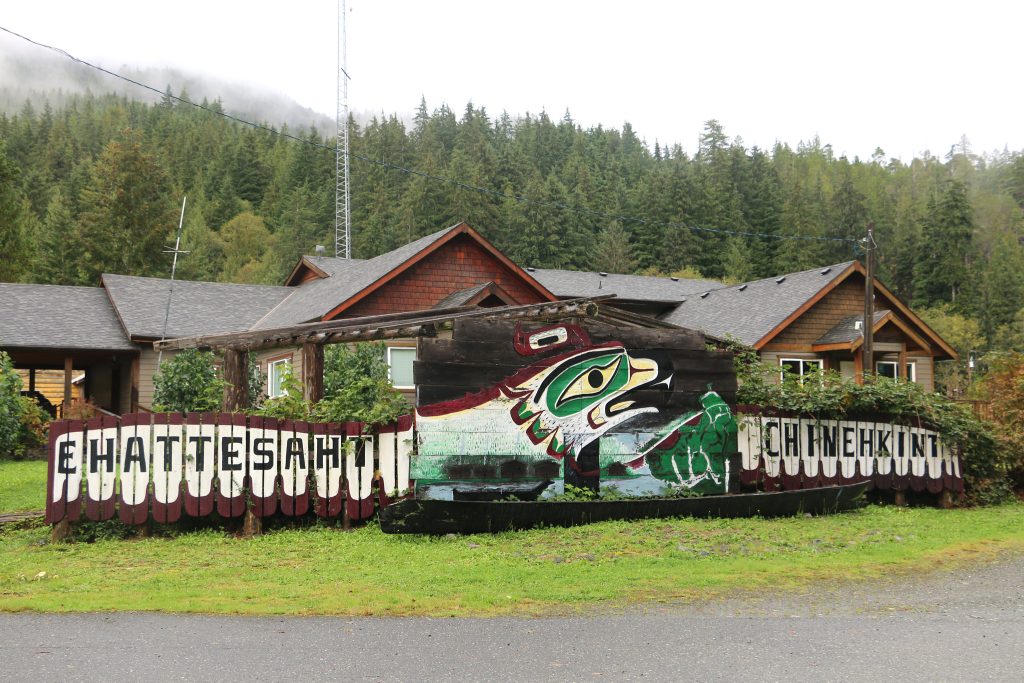
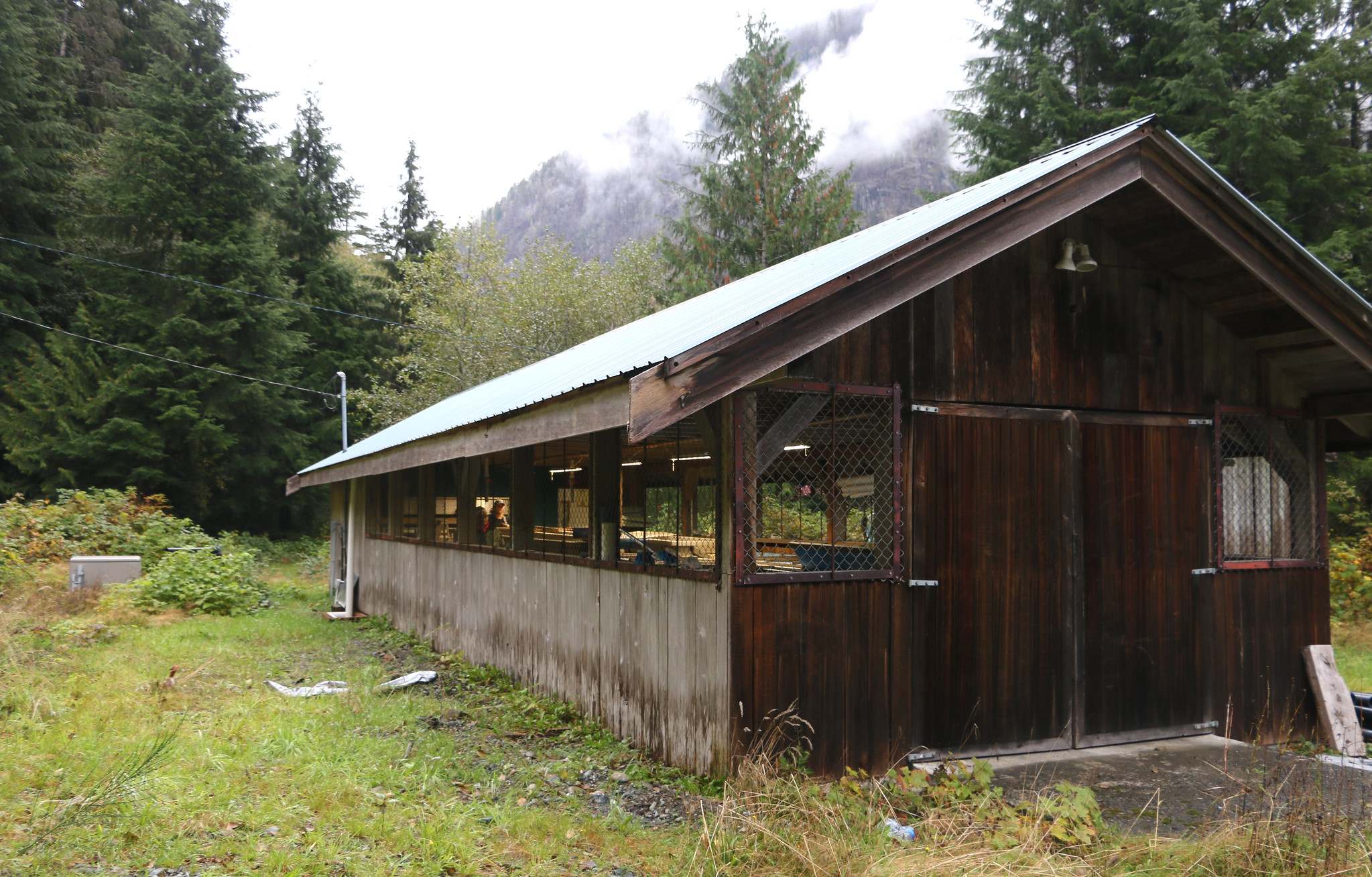
The Zeballos Hatchery, situated in Ehattesaht/Chinehkint ha-houlthee (Chiefly territory), has seen many changes over the past 20 years.
Originally built by volunteers around the year 2000 using materials on hand, the hatchery has been managed by Ehattesaht/Chinehkint First Nation (ECFN) since 2013. It has undergone much-needed repairs over the past few years to ensure its continued operation and to maintain its role in the community.
Financial support for the improvements has come from a variety of sources.
Past ECFN Fisheries Manager David Miller began the rebuilding process, securing funds and equipment to upgrade the hatchery infrastructure. Miller’s efforts were built on by multiple others and now the work has all come together.
“Working with Tyler and Helena [of ECFN Fisheries] last year, I was able to get some Pacific Salmon Foundation (PSF) funding for the rebuild, said Ian Douglas, DFO’s Campbell River Community Advisor, Salmonid Enhancement Program.
Douglas is referring to several upgrades to the hatchery that were made in the aftermath of a 2021-2022 snow event that caused a week-long power outage in the community. The outage caused damage to pipes and valves within the hatchery and resulted in incubating fish being turned into “popsicles.” The pipes subsequently burst during the hatchery shutdown in spring 2023.
The combination of PSF funding with additional support from Fisheries and Oceans Canada’s (DFO) Aboriginal Fisheries Strategy (AFS) Programs allowed for significant improvements to the hatchery.
“We upgraded all of the pipes with hatchery-grade pipes, replaced a number of shelves for safety, and got new LED lighting,” said Claudia Tersigni, Uu-a-thluk’s term Northern Region Biologist.
Additionally, a new aeration unit was installed to improve water quality for the fish, and a backup generator and propane tank were purchased to mitigate future power outages.
While the upgrades are vital to the hatchery’s functioning, it is the people who come together to bring the facility, and the salmon, to life.
Ehattesaht/Chinehkint First Nation, DFO and the Zeballos Elementary/Secondary School work together to foster a sense of community and shared responsibility for the salmon rearing.
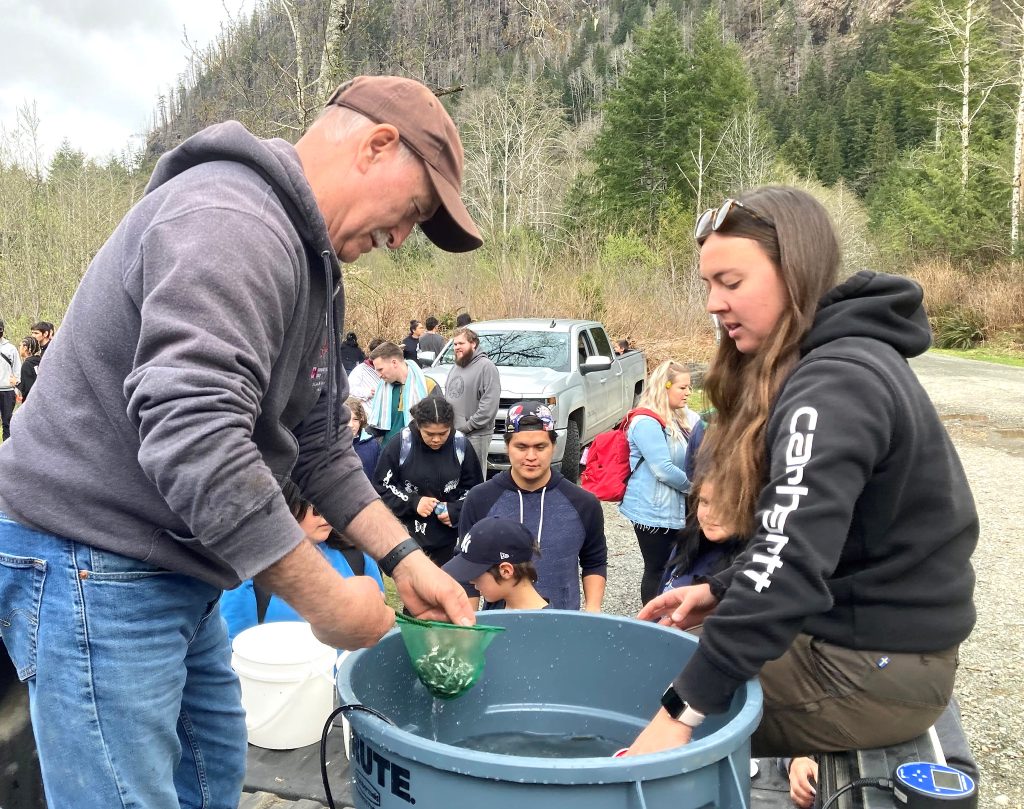
Photo by Ian Douglas
“It’s because of the amazing collaboration between the school, the nation, and DFO over the years, of us all working together, that we’ve been able to make it happen,” said former DFO Community Advisor, Stacey Larsen, who is currently working with DFO’s Pacific Salmon Strategy Initiative.
Under the current production plan, the hatchery’s objectives include the release of 20,000 hink̓uuʔas (chum salmon) fry each year, and a focus on providing stewardship opportunities to the community (with education as a key element of this stewardship).
This educational focus is embodied in the involvement of students of all ages from the school who assist with egg rearing in the classroom and fry release in the spring.
A crucial aspect of this community effort is the broodstock collection each fall which ensures the genetic health of the salmon being raised.
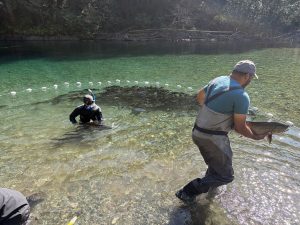
On a rainy Wednesday in mid-October, Tyler Hanson and Jessie Mack of ECFN Fisheries, Nicole Backe (DFO), retired DFO fish culturalist Dave Ewart, Tersigni and Douglas waded into Ehatis Creek to capture hink̓uuʔas broodstock using hand nets. They were accompanied by ECFN’s Chance John, who was new to the process and there to learn.
Broodstock collection normally takes place on the Zeballos River, with a raft and net, but water levels were too high which led to the alternative approach of using hand nets and a seine net in the creek.
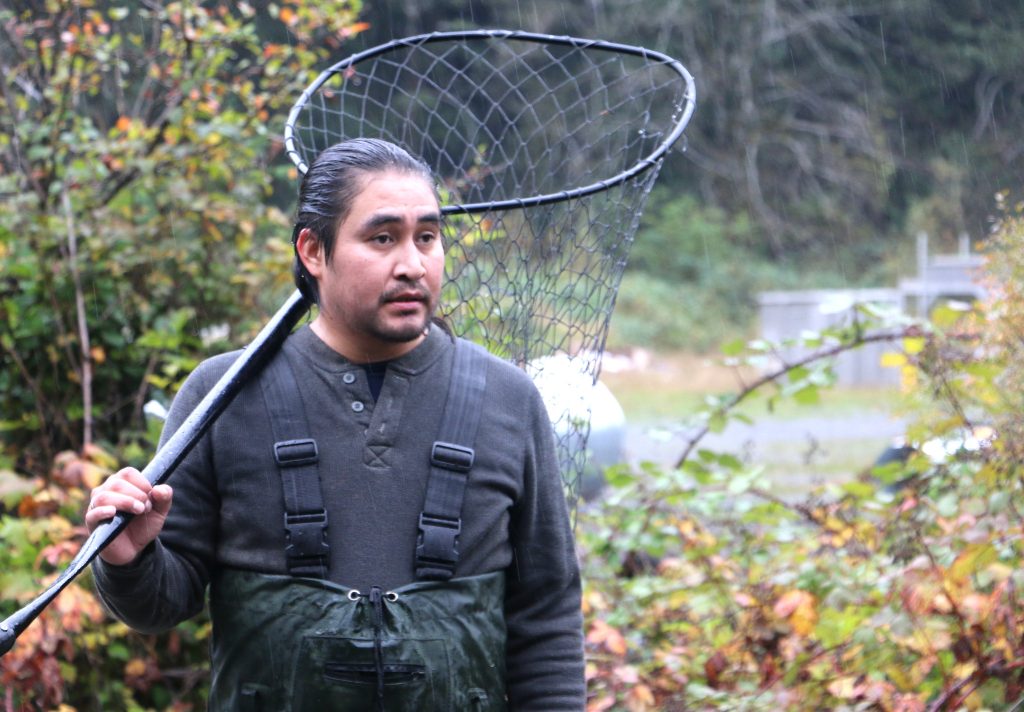
Tyler Hanson, ECFN Resource Management Officer Technician
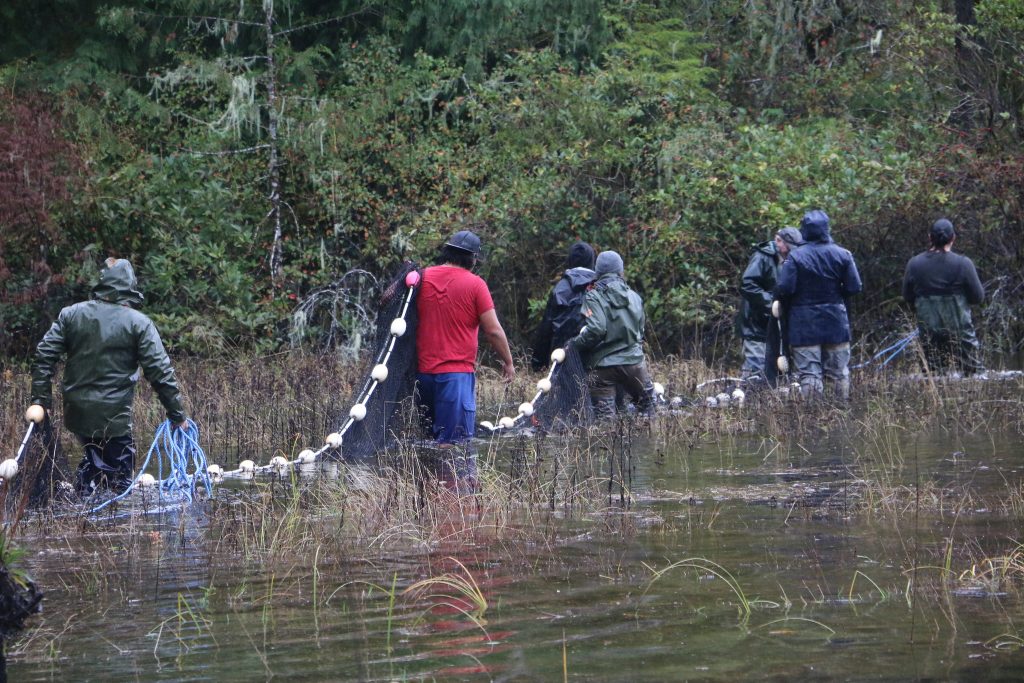
Working together as a team in Ehatis Creek

Jessie Mack of ECFN Fisheries holds up the female hink̓uuʔas to be used for egg collection
Approximately 30 fish were caught and assessed before a female hink̓uuʔas that had not yet released her eggs was found. Two males were also collected.
The fish were brought to the hatchery for an egg and milt-take demonstration by Ewart and Douglas. Newly instructed, Hanson and Mack successfully executed the takes on their own and transferred the fertilized eggs for incubation.
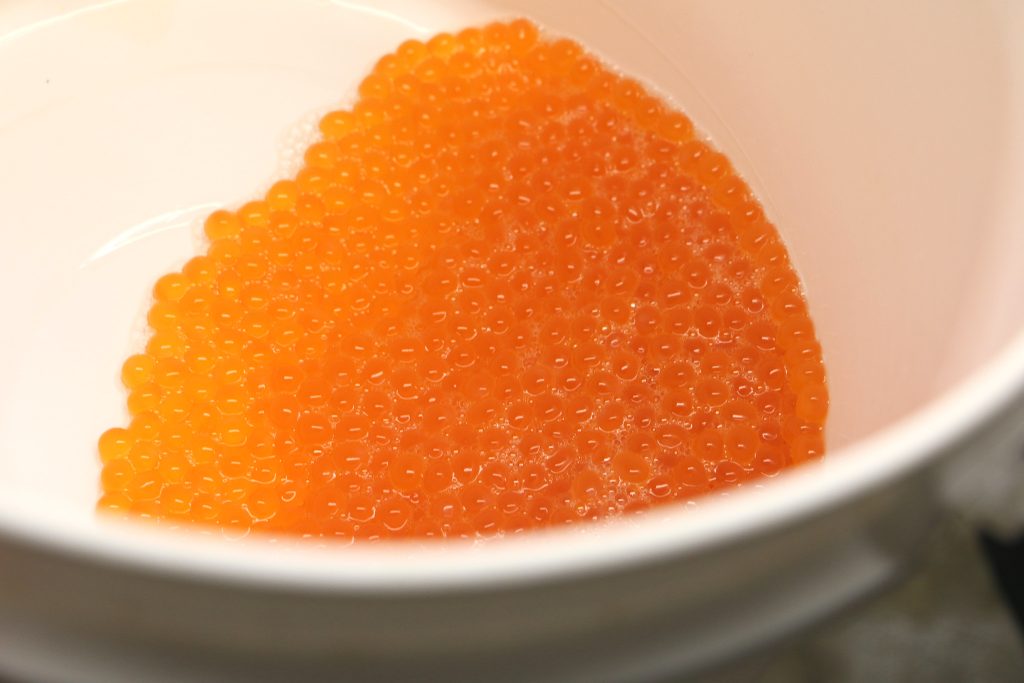
hink̓uuʔas (chum salmon) eggs
The collaborative effort among the organizations highlights the significance of community involvement in enhancing salmon populations to help rebuild and maintain sustainable salmon resources for future generations.
According to Hanson, ECFN Fisheries’ Resource Management Officer Technician who also acquires and distributes food fish for the nation, “It is very important that we teach the next generation about our role in nature.”
By coupling the nation’s newly purchased seine net and raft with the egg and milt take skills, the hope is that ECFN will build their capacity to do broodstock collection independently. The nation plans to rebuild their suuha (Chinook) salmon resources in the future, in addition to hink̓uuʔas.