By Irine Polyzogopoulos, Communications and Development Coordinator
Uu-a-thluk’s staffing complement is small, but it can be likened to a tightly woven cedar basket—strong and interconnected. When a team member departs, however, their absence creates a noticeable gap.
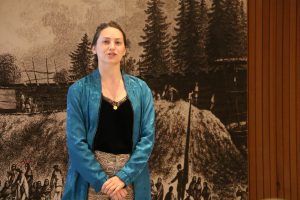
Carilia Horning, who joined the team in September 2023 as the Central Region Biologist covering Jared Dick’s educational leave, leaves behind such a gap, both in her professional contributions and the relationships she cultivated during her time with Uu-a-thluk.
Throughout her contract, Horning worked closely with Nuu-chah-nulth communities in the Central Region, including Hesquiaht, Ahousaht, and Tla-o-qui-aht First Nations. The biologist role is diverse and demanding, encompassing tasks like snorkel surveying, biological sampling, data analysis, hatchery support and representing Nuu-chah-nulth fisheries interests at meetings.
Horning (who focused on ecology and First Nations resource management in her undergraduate training and is an early-career biologist), embraced the varied nature of the job, including the areas with which she was not familiar.
“At first, it was an overwhelming number of projects, particularly without having a background in the different kinds of project in place, but also very rewarding because you learn quickly and it’s so dynamic,” said Horning.
Throughout this work, Horning formed strong collaborative relationships, most notably with Kayley Hollyer, Uu-a-thluk’s term Fisheries Technician whose focus is on salmon initiatives.
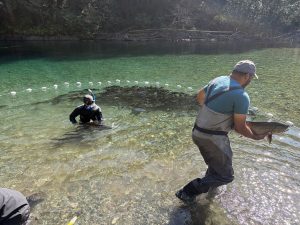
Together with a broad range of partners, including Maaqutusiis Hahoulthee Stewardship Society, Ahousaht Fisheries, Tofino Enhancement Society, Ha’oom Fisheries Society and students of Maaqutusiis Secondary School, the two contributed to the ceremonial release of juvenile hink̓uuʔas (chum salmon) in the Bedwell River—a moment Horning considers one of the highlights of her time with Uu-a-thluk.
“Having Kayley on board for that has been great—that is her area of expertise, so she’s been very helpful, and it’s been great to learn from her,” said Horning.
She added that assisting with hatchery broodstock collection and working with the hatchery team on the fertilization and transfer of eggs was a cherished opportunity.
Hollyer and Horning met in 2021 at an eDNA sampling workshop co-hosted by Uu-a-thluk, making the overlap of their contracts a professional full-circle moment.
Horning’s work also aligned with a pivotal moment in fisheries management—the changes in the management of the West Coast Vancouver Island herring fishery led by a collaboration between Uu-a-thluk, Landmark Fisheries and Fisheries and Oceans Canada.
“This is a fishery that was mismanaged and collapsed, and now we’re on the forefront of having management change and looking at it from a new framework,” said Horning.
“We’re seeing a lot of positive change and things are looking bright for the future – that’s a pretty special thing to be a part of,” she added.
At the core of Horning’s approach to her work was a strong emphasis on relationship-building. She credits her father for the sage advice to “focus on the relationships and the people in the job first,” as her priority for her work with Nuu-chah-nulth Nations.
One of these relationships ended up being with Hesquiaht First Nation’s Rufus Charleson, whose 30 years of fisheries knowledge and experience has left an impression on Horning.
“I feel privileged to learn from his stories and experiences working in fisheries,” she said, reflecting on the time spent conducting herring and clam surveys, and stream walking with Charleson.
“Learning about what streams looked like before harmful logging practises destroyed spawning habitat, but also seeing how some of the restoration work has been successful and salmon have returned to Hesquiaht Harbour has been incredibly valuable.”
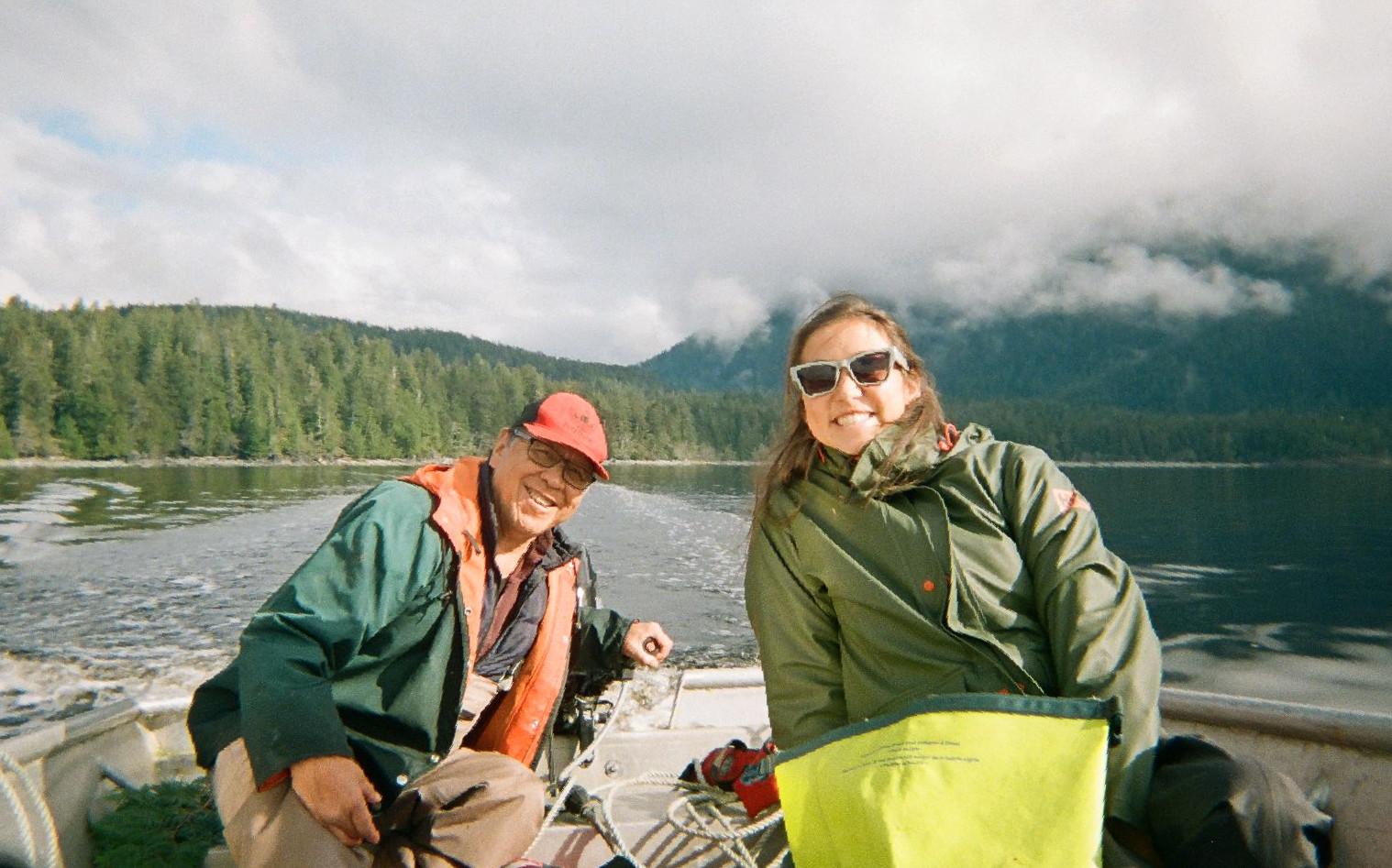
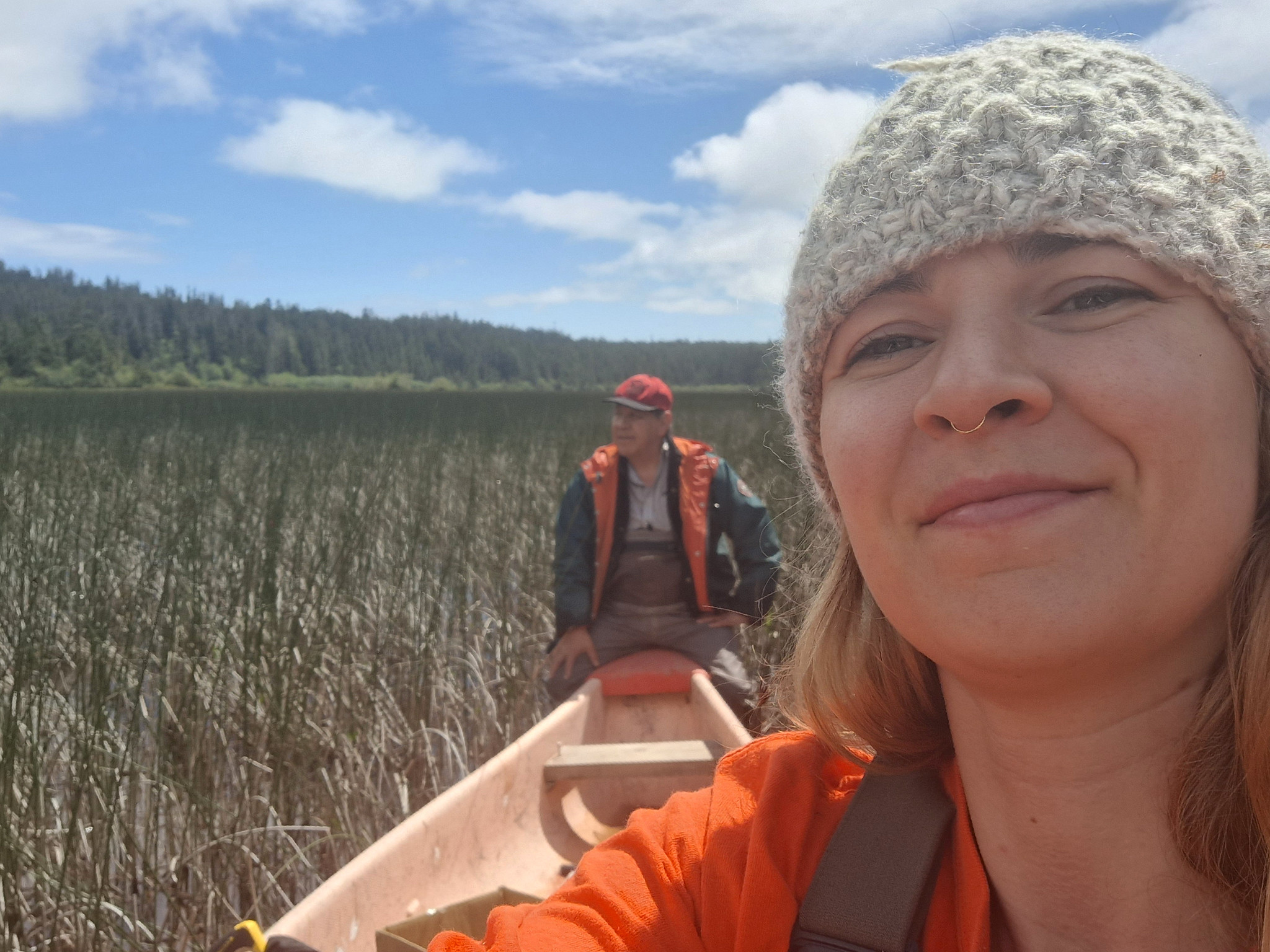
Rufus Charleson and Kayley Hollyer, two people Carilia Horning worked closely with during her time with Uu-a-thluk.
Horning is Gitxsan from Gitwangak, frog clan, on her mother’s side of the family. Seeing her uncle harvest salmon is what sparked an interest in community-led stewardship.
The time she spent in the Arctic learning about traditional stewardship practices deepened that interest, and her understanding has evolved further over the past year-and a-half working alongside Nuu-chah-nulth Nations.
“What I want to carry forward with me is the importance of collaborating with communities and supporting them in resource management,” said Horning, reflecting on her contract.
As Horning prepares to move on to new endeavours, she acknowledges how her time with Nuu-chah-nulth communities has significantly expanded her perspective.
“With the uncertain times we’re in, learning from folks with these deep understandings of the relationships around them is so inspiring—it gives me a positive view of what things can look like in all communities.”